
Yes, dry age-related macular degeneration (AMD) can be treated and managed, although there is currently no cure. Early diagnosis and ongoing retinal care are essential for slowing disease progression and helping preserve central vision over time.
Modern treatment strategies focus on monitoring retinal health, reducing risk factors, supporting retinal function, and identifying patients who may benefit from advanced therapies such as the Valeda Light Delivery System.
What Is Dry Macular Degeneration?

Dry AMD is a progressive retinal disease that affects the macula, the central portion of the retina responsible for sharp, detailed vision. It develops when retinal cells gradually deteriorate, and small protein deposits called drusen accumulate beneath the retina.
Unlike wet AMD, dry AMD does not involve abnormal leaking blood vessels. However, it can still lead to significant vision impairment if the disease advances.
Patients with dry AMD often notice:
-
- Blurred central vision
- Difficulty reading
- Distorted straight lines
- Trouble recognizing faces
- Increased difficulty seeing in low light
Since symptoms often develop slowly, many patients do not realize the condition is progressing until vision becomes noticeably affected.
How Is Dry AMD Treated?

Treatment for dry AMD focuses on slowing progression and preserving as much retinal function as possible. Care typically involves long-term monitoring by a retina specialist using advanced retinal imaging to track subtle changes in the macula.
Depending on disease severity, treatment may include nutritional support, lifestyle modifications, and specialized retinal therapies designed to support retinal health.
At MERSI, eligible patients may benefit from the Valeda Light Delivery System, the first FDA-authorized light-based treatment for dry AMD. This therapy uses photobiomodulation to help support retinal cellular function in certain patients with dry age-related macular degeneration.
Why Early Detection Matters
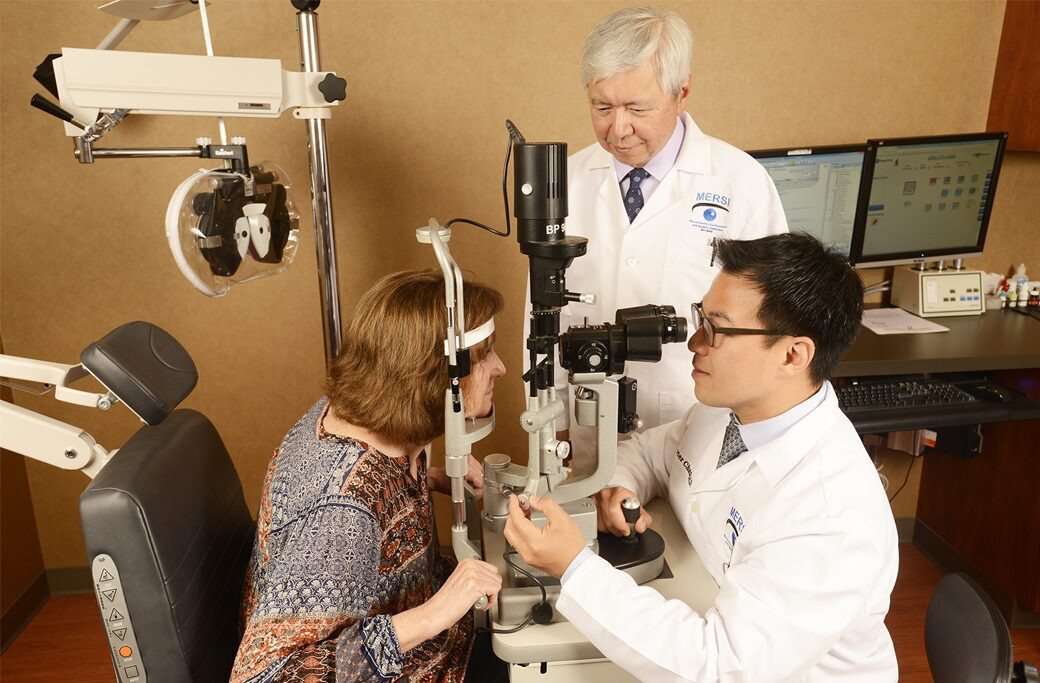
Dry AMD often progresses gradually and painlessly, which makes regular retinal evaluations extremely important. Early detection allows specialists to monitor disease progression closely and begin supportive treatment strategies before advanced vision loss develops.
Patients with a family history of macular degeneration, smoking history, cardiovascular disease, or age-related vision changes may have increased risk and should undergo regular retinal examinations.
Ongoing monitoring is also important because dry AMD can sometimes progress into wet AMD, which requires more urgent treatment.
Why Patients Near Boston Choose MERSI for Dry AMD Care
Patients throughout the Boston area choose MERSI in Waltham for specialized retinal care and advanced macular degeneration management.
At MERSI, patients receive:
-
- Evaluation by fellowship-trained retina specialists
- Advanced retinal imaging and diagnostics
- Personalized long-term monitoring plans
- Access to innovative dry AMD therapies
- Coordinated care focused on preserving vision and quality of life
This specialized approach allows patients to receive comprehensive retinal care close to home.
Can Dry AMD Be Treated?
Although dry macular degeneration cannot currently be cured, early diagnosis and specialized retinal care can help slow progression and preserve long-term vision.
Patients experiencing changes in central vision or diagnosed with dry AMD can access advanced evaluation and treatment at MERSI in Waltham. Consistent monitoring and early intervention remain essential for protecting retinal health over time.
Frequently Asked Questions About Dry AMD
Can dry AMD become wet AMD?
Yes. Some patients with dry AMD may later develop wet AMD, which involves abnormal blood vessel growth beneath the retina and requires more urgent treatment.
Is dry macular degeneration reversible?
No, dry AMD is not currently reversible. However, treatment and monitoring may help slow disease progression and preserve vision.
What is the Valeda Light Delivery System?
Valeda is an FDA-authorized light-based therapy designed to support retinal function in certain patients with dry age-related macular degeneration.
Who treats dry macular degeneration?
Dry AMD is typically managed by a fellowship-trained retina specialist with expertise in retinal disease diagnosis and long-term monitoring.