
Uveitis – Ocular Inflammatory Disease

Uveitis is inflammation inside the eye that can cause redness, pain, light sensitivity, floaters, blurred vision or other changes in sight. It may affect one or both eyes, begin suddenly or gradually, and sometimes recur or become chronic. Because untreated inflammation can damage sensitive eye structures, new or worsening symptoms deserve timely evaluation by an ophthalmologist.
Treatment is individualized. The appropriate approach depends on where the inflammation is located, its cause and severity, whether infection is present, and whether the condition is affecting other parts of the body.
What Is Uveitis?
Uveitis is a group of inflammatory eye diseases. The name comes from the uvea, the middle layer of the eye between the sclera (the white outer coating) and the retina.
The uvea includes:
-
- The iris, or colored part of the eye
- The ciliary body, which helps the eye focus
- The choroid, a layer containing blood vessels behind the retina
Although the term refers to the uvea, inflammation can also affect the vitreous, retina, optic nerve or other nearby structures.
What Are the Different Types of Uveitis?
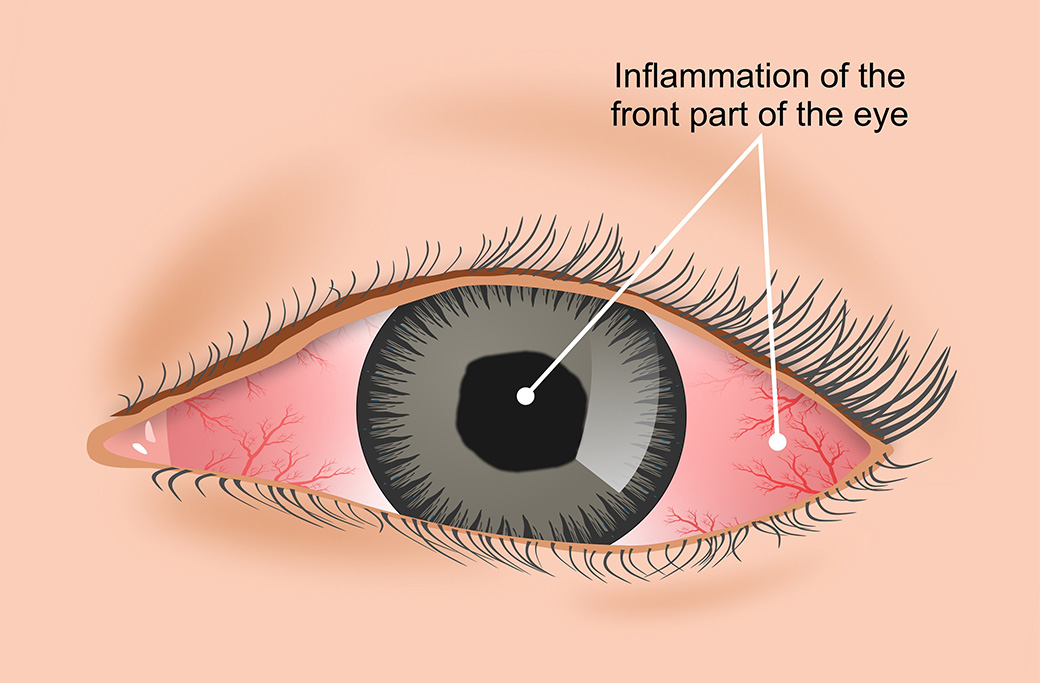
Uveitis is classified according to the area of the eye where inflammation is concentrated.
Anterior Uveitis
Anterior uveitis affects the front of the eye, including the iris. It may also be called iritis or iridocyclitis. Symptoms can include redness, pain, light sensitivity and blurred vision.
Intermediate Uveitis
Intermediate uveitis primarily affects the vitreous and structures in the middle of the eye. Floaters and blurred vision may be prominent symptoms.
Posterior Uveitis
Posterior uveitis affects structures toward the back of the eye, including the choroid or retina. Symptoms may include floaters, blurred vision, missing areas of vision or other changes in visual function.
Panuveitis
Panuveitis involves inflammation in the front, middle and back portions of the eye.
The location of inflammation helps the ophthalmologist determine which examinations, testing and treatment approaches may be appropriate.
What Symptoms Can Uveitis Cause?
Possible symptoms include:
-
- Eye redness
- Eye pain
- Sensitivity to light
- Blurred or hazy vision
- New floaters
- Flashes of light
- A decrease or change in vision
Symptoms may affect one or both eyes. Some forms of uveitis cause noticeable discomfort, while others may produce few early symptoms.
Contact an eye-care professional promptly if you develop new eye pain, persistent redness, marked light sensitivity, floaters or unexplained changes in vision. Sudden or severe vision loss requires urgent medical evaluation.
What Causes Uveitis?
Uveitis has many possible causes, and the cause is not identified in every patient.
Potential causes or associations include:
-
- An immune-mediated or autoimmune disease
- An infection
- An eye injury
- A reaction associated with a medication
- An inflammatory condition affecting another part of the body
- Rarely, a condition that resembles inflammation but has a different underlying cause
An autoimmune diagnosis should not be assumed simply because a patient has uveitis. Likewise, the absence of a known autoimmune condition does not rule out ocular inflammation.
The ophthalmologist uses the location and pattern of inflammation, the patient’s medical history, examination findings and selected testing to investigate possible causes.
How Is Uveitis Diagnosed?
There is no single test that diagnoses every form or cause of uveitis. An evaluation generally begins with a detailed history and comprehensive eye examination.
The ophthalmologist may ask about:
-
- When the symptoms began
- Whether one or both eyes are affected
- Previous episodes of inflammation
- Joint, skin, digestive, respiratory or neurologic symptoms
- Recent infections or exposures
- Current and previous medications
- Existing autoimmune or inflammatory conditions
- Previous eye injuries or surgery
The eye examination may include visual-acuity testing, eye-pressure measurement, a slit-lamp examination and a dilated examination of the back of the eye.
Depending on the findings, the physician may recommend retinal imaging, angiography, ultrasound, blood tests or other targeted studies. Testing should be selected according to the patient’s presentation rather than using the same broad panel for every person.
Learn more about the diagnostic services available through advanced eye testing at MERSI.
How Is Uveitis Treated?
Uveitis treatment is designed to control inflammation, address an underlying cause when one is identified, relieve symptoms and reduce the risk of complications.
The treatment plan depends on:
-
- Whether the inflammation is infectious or noninfectious
- Which part of the eye is affected
- The severity of the inflammation
- Whether one or both eyes are involved
- Whether the condition is acute, recurrent or chronic
- The patient’s other medical conditions
- Previous treatment response and side effects
Corticosteroid Treatment
Corticosteroids may be used to reduce inflammation. Depending on the type and severity of uveitis, they may be prescribed as eye drops, medication by mouth, an injection around or into the eye, or another physician-selected delivery method.
Corticosteroids can cause side effects, including increased eye pressure and cataract formation. Patients receiving them need appropriate medical and eye monitoring and should not change or stop treatment without instructions from the prescribing clinician.
Treatment for Infection
When an infection is causing or contributing to uveitis, treatment may include an antimicrobial medication selected for the specific organism. Controlling inflammation without appropriately addressing an infection can be unsafe, making an accurate diagnosis important.
Immunomodulatory Treatment
Some patients with recurrent, chronic, severe or steroid-dependent noninfectious uveitis may need medication that modifies or suppresses immune-system activity.
These medicines require individualized selection and ongoing monitoring. Care may be coordinated with a rheumatologist, infectious-disease physician or another medical specialist when an associated systemic condition is present.
Infusion Therapy
Infusion treatment may be considered for selected patients whose inflammatory eye disease requires systemic therapy delivered intravenously. It is not necessary or appropriate for every person with uveitis.
Patients can learn more about eye conditions that may require IV infusion therapy and MERSI’s Infusion Suite.
Surgery
Surgery is not the primary treatment for most episodes of uveitis. It may sometimes be considered to diagnose an uncertain condition or address complications such as cataract, glaucoma, vitreous debris or retinal problems.
The timing and type of surgery depend on the individual eye, the level of inflammatory control and the complication being treated.
Can Uveitis Come Back?
Yes. Some forms of uveitis occur once and resolve, while others recur or require long-term management.
A patient who has previously had uveitis should contact their eye-care team if familiar symptoms return. Restarting leftover medication without an examination may be unsafe because another eye condition can cause similar symptoms and treatment varies according to the cause.
Read more about uveitis recurrence and ongoing monitoring.
What Complications Can Uveitis Cause?
Possible complications include:
-
- Cataracts
- Glaucoma or increased eye pressure
- Macular edema
- Retinal or choroidal damage
- Scarring or adhesions inside the eye
- Low eye pressure
- Retinal detachment
- Permanent loss of vision
Complications may result from the inflammation, the underlying disease or treatment. Appropriate follow-up helps the physician monitor both disease activity and possible treatment effects.
When Should You See a Uveitis Specialist?
A specialist evaluation may be appropriate when:
-
- The diagnosis remains uncertain
- Inflammation is severe or affects the back of the eye
- Symptoms continue despite treatment
- Uveitis repeatedly returns
- Steroid treatment cannot be reduced without another flare
- Medication side effects are becoming a concern
- An infection, autoimmune disease or other systemic cause is suspected
- The patient needs coordinated eye and medical care
- A second opinion is desired for a complex treatment decision
A uveitis or ocular-immunology specialist has additional experience evaluating inflammatory eye diseases and distinguishing among conditions that can look similar.
What Should You Expect at a MERSI Uveitis Evaluation?
Your visit may include a detailed review of your eye symptoms, previous treatment, medical history and relevant records. The examination and testing selected will depend on your individual presentation.
Bring, when available:
-
- A current medication list
- Records from previous eye examinations
- Imaging and laboratory results
- Information about prior treatments and how you responded
- Contact information for other physicians involved in your care
- A list of questions or concerns
After the evaluation, the physician will discuss the findings, whether additional testing is appropriate, available treatment options and the recommended follow-up schedule.
Specialized Uveitis Care at MERSI
MERSI provides evaluation and treatment for uveitis and other ocular inflammatory diseases at its Waltham practice. Care may involve detailed ophthalmic examinations, imaging, laboratory investigation, medical treatment and coordination with other healthcare professionals.
Patients seeking an evaluation, continued management or a second opinion may request an appointment with MERSI or call 781-891-6377.
If you are experiencing sudden or severe vision loss or another possible medical emergency, seek immediate professional guidance rather than relying on a routine online appointment request.
This page provides general educational information and does not replace an examination, diagnosis or individualized medical advice.
Frequently Asked Questions
Is uveitis an autoimmune disease?
Not always. Uveitis may be associated with autoimmune or inflammatory disease, but it can also result from infection, injury or other causes. In some patients, no underlying cause is identified.
Can uveitis affect both eyes?
Yes. Uveitis may affect one eye or both eyes. The pattern can provide information that helps guide diagnosis, but it does not establish the cause by itself.
Is uveitis treatment always based on steroid eye drops?
No. Steroid eye drops are commonly used for some forms of anterior uveitis, but treatment varies by cause, location and severity. Other patients may need antimicrobial treatment, injections, systemic medication, infusion therapy or treatment for a complication.
Can uveitis cause permanent vision loss?
Uveitis can cause complications that damage vision. The risk varies with the type and severity of inflammation, its cause, how quickly it is recognized and the response to treatment.
Can I stop uveitis medication when my eye feels better?
Do not change or stop prescribed treatment without speaking with the treating clinician. Symptoms may improve before inflammation is fully controlled, and some medicines need to be reduced gradually.
Medically reviewed by: Peter Y. Chang, MD, FACS
MERSI specialty: Ocular inflammatory diseases, Vitreoretinal surgery, Cataract
Reviewed: August 27. 2026