
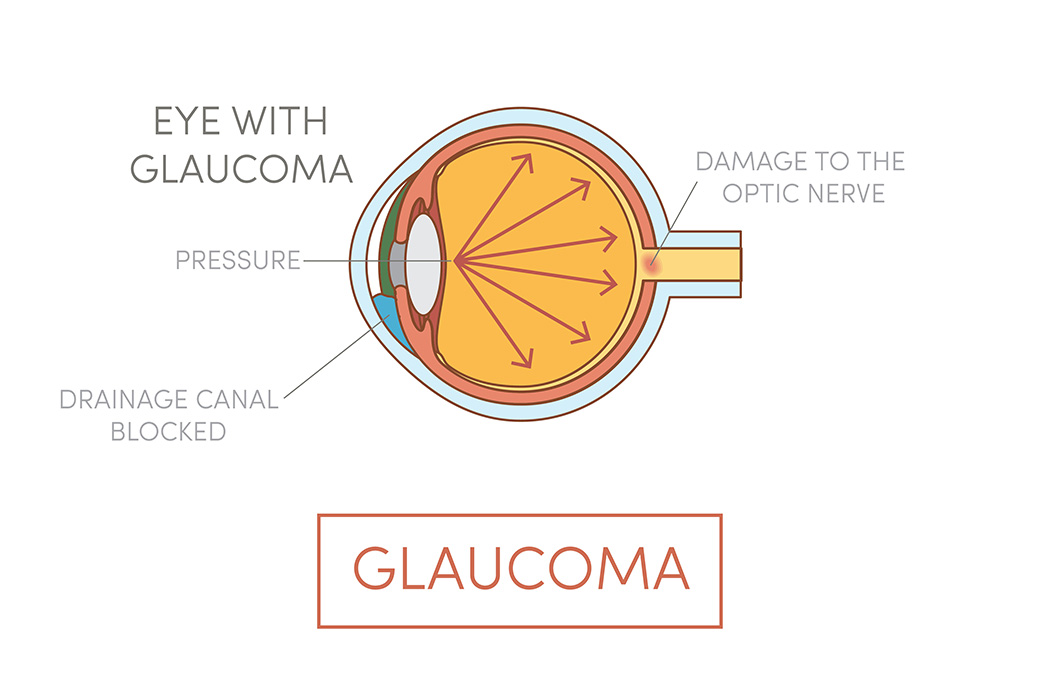
Glaucoma is a group of eye diseases that damage the optic nerve, which carries visual information from the eye to the brain. Over time, this damage can cause permanent vision loss.
Many forms of glaucoma develop gradually and cause no noticeable symptoms at first. That is why regular eye examinations are important, particularly for people with glaucoma risk factors.
Eye pressure is an important part of glaucoma, but it does not tell the whole story. Some people develop glaucoma even when their eye pressure is not unusually high, while others have elevated eye pressure without glaucoma.
What Are the Symptoms of Glaucoma?

The most common type of glaucoma often develops without noticeable early symptoms. As the disease progresses, a person may gradually lose peripheral, or side, vision.
Depending on the type and stage of glaucoma, possible symptoms or changes can include:
-
- Gradual loss of peripheral vision
- Areas of missing vision
- Blurred or decreased vision
- Halos around lights
- Eye pain or redness in some forms of glaucoma
When Glaucoma Symptoms Are an Emergency
A sudden increase in eye pressure caused by acute angle-closure glaucoma is an eye emergency.
Seek immediate medical attention for sudden severe eye pain, a red eye, rapidly blurred or decreased vision, halos around lights, severe headache, nausea or vomiting—particularly when several of these symptoms occur together.
Do not wait for a routine eye appointment if you are experiencing symptoms that could represent acute angle closure.
What Are the Main Types of Glaucoma?
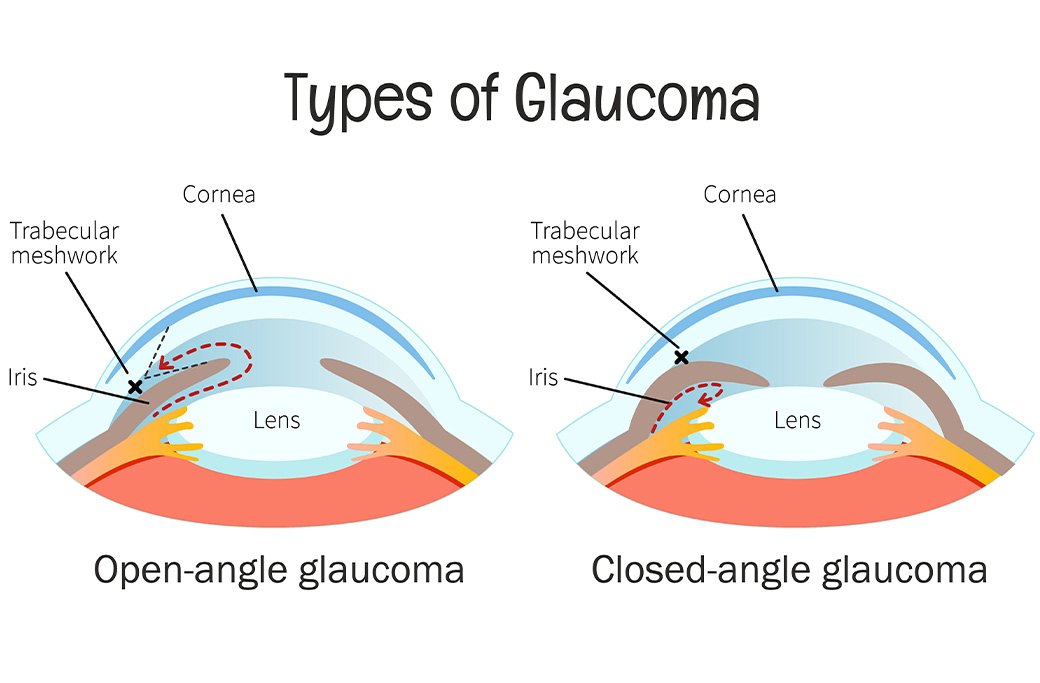
Glaucoma is not one disease. Several types can damage the optic nerve in different ways.
Primary Open-Angle Glaucoma
Primary open-angle glaucoma is the most common type of glaucoma in the United States. It usually develops gradually and may cause no noticeable symptoms during its early stages.
Angle-Closure Glaucoma
Angle-closure glaucoma occurs when the eye’s drainage angle becomes narrowed or blocked. It can develop gradually or happen suddenly. A sudden, or acute, attack requires immediate medical attention.
Normal-Tension Glaucoma
Normal-tension glaucoma causes characteristic optic nerve damage even though measured eye pressure is not unusually high.
This is one reason glaucoma cannot be diagnosed (or ruled out) based on an eye-pressure measurement alone.
Secondary Glaucoma
Secondary glaucoma develops because of another eye condition, injury, medication or other identifiable cause.
Eye inflammation, trauma, certain medications such as corticosteroids and other eye disorders may contribute to secondary glaucoma. Treatment may require managing both the underlying condition and the glaucoma.
Who Is at Risk for Glaucoma?
Anyone can develop glaucoma, but certain factors are associated with a higher risk, including:
-
- Increasing age
- A family history of glaucoma
- Elevated eye pressure
- Certain racial or ethnic backgrounds
- Thin central corneas
- Previous eye injury
- Certain eye diseases or inflammation
- Significant or prolonged corticosteroid exposure
- Certain medical conditions
Having one or more risk factors does not mean that you have glaucoma. Your eye doctor can consider your individual risk factors when recommending examination and monitoring.
How Is Glaucoma Diagnosed?
Glaucoma is diagnosed by looking for evidence of optic nerve damage and assessing a patient’s overall risk, not simply by measuring eye pressure.
A glaucoma evaluation may include:
-
- Eye-pressure measurement, or tonometry
- Dilated examination of the optic nerve
- Optical coherence tomography (OCT)
- Visual-field testing
- Gonioscopy to examine the eye’s drainage angle
- Corneal-thickness measurement, or pachymetry
- Photography or other imaging to document the optic nerve
Some of these tests may be repeated over time so your physician can determine whether glaucoma is stable or progressing.
If you have already undergone glaucoma testing elsewhere, previous visual fields, OCT scans, eye-pressure records and information about past medications or procedures may be useful when evaluating changes over time.
How Is Glaucoma Treated?
Glaucoma treatment focuses on lowering eye pressure to reduce the risk of additional optic nerve damage. Treatment is individualized based on the type and severity of glaucoma, previous treatment, eye anatomy and other patient-specific factors.
Treatment cannot restore optic nerve tissue that has already been permanently damaged, and it cannot guarantee that glaucoma will never progress. Continued monitoring remains important.
Prescription Eye Drops
Prescription eye drops can lower eye pressure by decreasing fluid production within the eye, improving fluid drainage or both. Some patients need more than one medication.
Laser Treatment
Laser procedures can be used to treat certain types of glaucoma. For example, selective laser trabeculoplasty may be considered for some patients with open-angle glaucoma, while laser peripheral iridotomy may be used for certain patients with narrow or closed drainage angles.
Learn more about glaucoma laser treatment and what patients can expect.
Minimally Invasive Glaucoma Surgery (MIGS)
Minimally invasive glaucoma surgery, or MIGS, refers to a group of procedures designed to lower eye pressure using smaller incisions and generally less tissue disruption than traditional glaucoma surgery.
MIGS may be appropriate for certain patients, including some people undergoing cataract surgery. It is not the right treatment for every type or stage of glaucoma.
Traditional Glaucoma Surgery
When glaucoma cannot be adequately controlled with medications, laser treatment or less invasive procedures, traditional glaucoma surgery may be considered.
Your ophthalmologist can recommend an approach based on the type and severity of your glaucoma, your target eye pressure and how your eyes have responded to previous treatment.
Why Is Glaucoma Follow-Up Important?
Glaucoma is usually a long-term condition, so treatment and monitoring go together.
Your physician may periodically evaluate your eye pressure, optic nerve, OCT measurements and visual-field results to look for signs of change.
The goal is not simply to reach one specific pressure number. Your physician considers your individual examination and testing to determine whether treatment appears to be adequately controlling the disease.
Glaucoma Care at MERSI
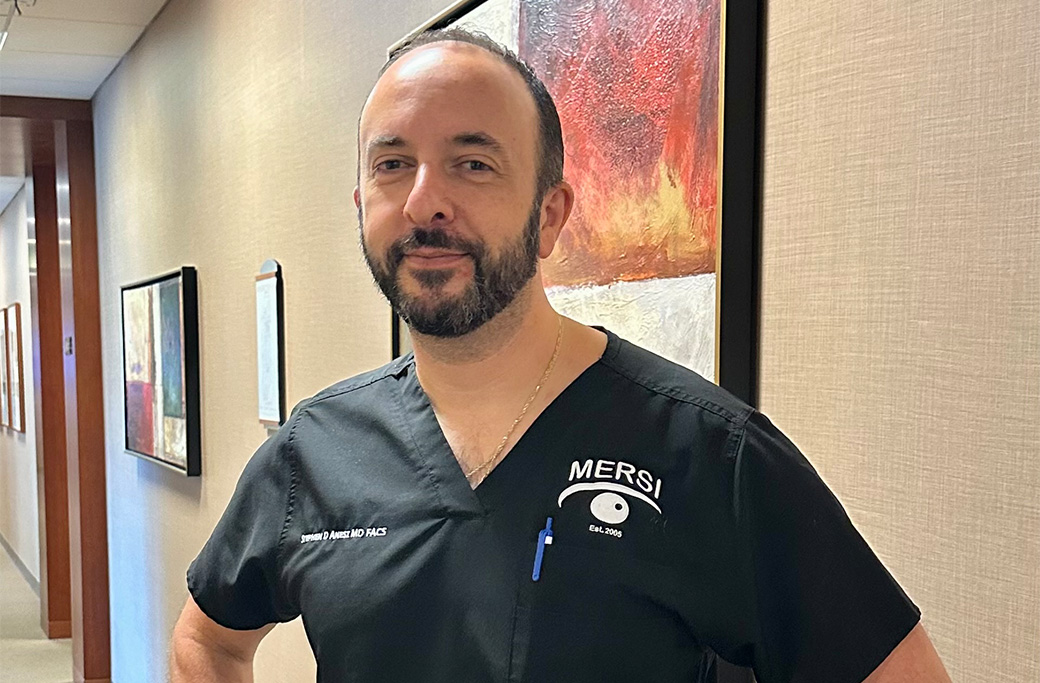
The Massachusetts Eye Research and Surgery Institution (MERSI) provides comprehensive glaucoma evaluation and treatment at our office in Waltham, Massachusetts, serving patients from Greater Boston, throughout New England and beyond.
Stephen D. Anesi, MD, FACS, Partner & Co-President of MERSI, specializes in medical and surgical glaucoma care, including minimally invasive glaucoma surgery (MIGS), as well as cataract, cornea, medical retina and ocular inflammatory disease.
MERSI provides glaucoma diagnostic evaluation and monitoring, prescription treatment, laser procedures and surgical management. For patients with glaucoma alongside cataract, inflammation or another complex eye condition, MERSI’s ophthalmologists can coordinate care across relevant eye specialties.
Schedule a Glaucoma Evaluation at MERSI
If you have been diagnosed with glaucoma, have elevated eye pressure, are concerned about your risk or would like another opinion about your treatment options, MERSI can provide a comprehensive glaucoma evaluation.
Make an appointment at our Waltham, Massachusetts office or call 781-891-6377 to speak with our team.
Frequently Asked Questions About Glaucoma
Can you have glaucoma without knowing it?
Yes. The most common type of glaucoma can cause no noticeable symptoms during its early stages. This is one reason comprehensive eye examinations are important, particularly for people at increased risk.
Is glaucoma always caused by high eye pressure?
No. High eye pressure is an important glaucoma risk factor, but some people develop glaucoma even when their measured pressure is not unusually high. Other people have elevated eye pressure without glaucoma.
Can glaucoma be cured?
There is currently no cure that reverses glaucoma-related optic nerve damage. Treatment is intended to lower eye pressure and reduce the risk of additional damage.
Can vision lost from glaucoma come back?
Vision permanently lost because of glaucoma-related optic nerve damage generally cannot be restored. Early detection, appropriate treatment and ongoing monitoring can help protect remaining vision.
Does everyone with glaucoma need surgery?
No. Depending on the individual patient, glaucoma may be treated with prescription eye drops, laser treatment, surgery or a combination of approaches.
Medically reviewed by:
Stephen D. Anesi, MD, FACS, Partner & Co-President
Specializes in: Ocular inflammatory diseases, cornea, glaucoma (medical, surgical & MIGS), cataract, and medical retina
Peter Y. Chang, MD, FACS, Partner & Co-President
Specializes in: Ocular inflammatory diseases, vitreoretinal surgery, and cataract
Carl S. Wilkins, MD
Specializes in: Ocular inflammatory diseases, vitreoretinal surgery, and cataract
Reviewed: September 29, 2026