
Quick Answer
How quickly you should see a retina specialist depends on your symptoms. Sudden vision loss, a curtain or shadow across your vision, or a sudden increase in flashes and floaters can require same-day evaluation. Other symptoms, such as gradually worsening vision or changes related to a known retinal condition, may warrant a prompt or routine appointment.
When it comes to retinal disease, timing matters. Some conditions can threaten vision quickly, while others develop gradually and can be monitored over time. Knowing the difference can help you get the right level of care without unnecessary delay.
When Should You See a Retina Specialist Immediately?
Some vision changes should be treated as an eye emergency.
Seek immediate evaluation if you experience:
-
- Sudden loss of vision in one or both eyes
- A curtain or dark shadow moving across your vision
- A sudden increase or “shower” of floaters
- New flashes of light, especially with floaters
- Sudden loss of peripheral vision
- A new missing or dark area in your vision
- Sudden, significant distortion of your vision
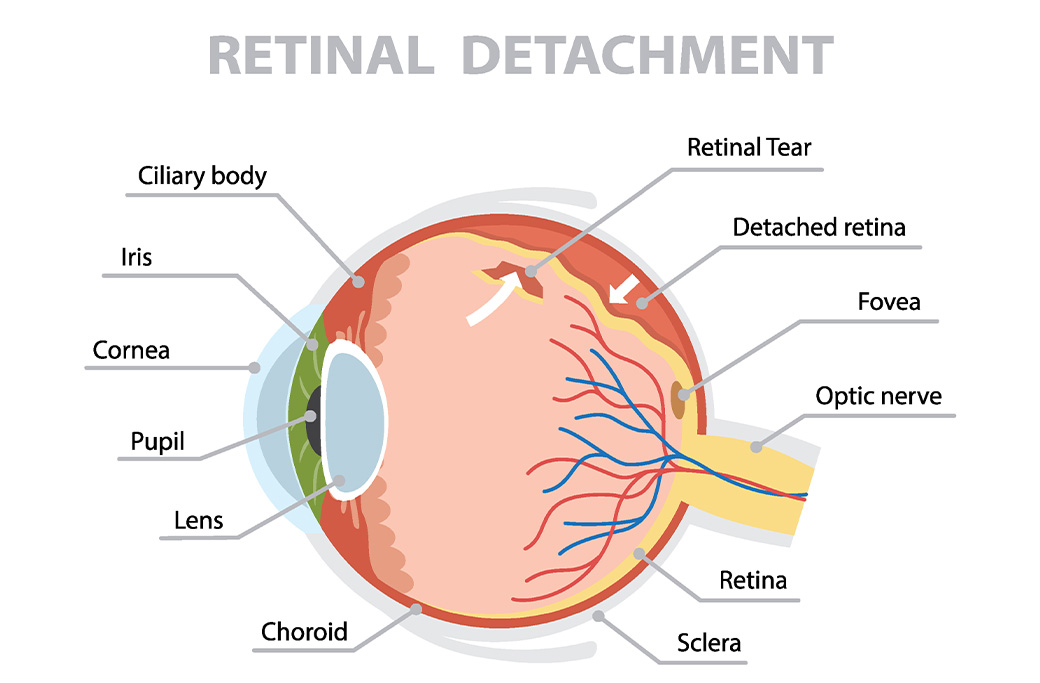
These symptoms can sometimes indicate a retinal tear, retinal detachment, retinal vascular occlusion, or another sight-threatening condition.
Do not wait for these symptoms to improve on their own. Prompt evaluation gives an eye specialist the opportunity to identify a problem and determine whether treatment is needed.
Not sure whether you need a retina specialist rather than a general ophthalmologist?
When Should You See a Retina Specialist Promptly?
Not every retinal symptom requires emergency care, but some should still be evaluated within a short period of time rather than waiting for a routine annual eye exam.
Consider prompt retina evaluation for:
-
- New or worsening floaters
- New distortion or wavy vision
- Changes in central vision
- Vision changes related to diabetes
- New symptoms if you have macular degeneration
- A known retinal condition that appears to be changing
- Unexplained vision changes that persist or worsen
- Blunt eye trauma from a sports injury
Recognizing the early signs of retinal disease can help patients seek evaluation before vision problems become more significant.
When Is a Routine Retina Appointment Appropriate?
Some patients need ongoing retinal care rather than urgent evaluation.
A routine appointment may be appropriate for:
-
- Monitoring stable macular degeneration
- Regular diabetic retinal examinations
- Follow-up of a previously diagnosed retinal condition
- Monitoring stable retinal changes
- Discussing long-term treatment options
Even when symptoms are not urgent, regular monitoring can be important for conditions that may progress without obvious symptoms.
How Quickly Should You See a Retina Specialist for Floaters?
New or suddenly increasing floaters should be evaluated promptly, particularly when accompanied by flashes of light.
Floaters are often caused by normal changes in the vitreous, the gel-like substance inside the eye. However, sudden floaters can sometimes occur when the vitreous pulls on the retina and causes a retinal tear.
If you develop new flashes, a sudden shower of floaters, a curtain or shadow, or vision loss, seek immediate evaluation.
How Quickly Should You See a Retina Specialist for Diabetic Eye Disease?
People with diabetes may need regular retinal monitoring even when they have no noticeable vision changes. If you already have diabetic retinopathy or diabetic macular edema, your retina specialist will recommend a follow-up schedule based on your condition and treatment.
However, new or worsening vision changes should not wait for your next scheduled appointment. MERSI provides specialized evaluation and treatment for diabetic retinal disease, including diabetic retinopathy and diabetic macular edema.
How Quickly Should You See a Retina Specialist for Macular Degeneration?
Macular degeneration often develops gradually, but changes in central vision should still be evaluated promptly.
Contact your eye specialist if you notice:
-
- New distortion or wavy lines
- A new blurry or missing area in your central vision
- Difficulty reading that develops suddenly
- A noticeable change in one eye
People with known AMD should follow the monitoring schedule recommended by their eye specialist. Patients who need specialized evaluation can learn more about seeing a macular degeneration specialist near Boston.
What Happens During an Urgent Retina Evaluation?
When you need prompt retinal evaluation, the goal is to quickly determine whether the retina is intact and whether treatment is necessary.
Your evaluation may include:
-
- A comprehensive eye examination
- Dilated retinal examination
- OCT imaging
- Retinal photography
- Wide-field retinal imaging
- Fluorescein angiography or other testing when appropriate
The testing performed depends on your symptoms and medical history.
At MERSI, fellowship-trained specialists use advanced diagnostic imaging to evaluate complex retinal conditions and determine the appropriate next step.
When in Doubt, Don’t Wait
It can be difficult to know whether a vision change is serious based on symptoms alone. When a significant change happens suddenly, it’s safer to have your eyes evaluated promptly rather than waiting to see if the symptoms resolve.
MERSI’s retina specialists provide advanced evaluation and treatment for patients experiencing sudden or unexplained vision changes, as well as those needing ongoing care for retinal disease.
If you’re concerned about a change in your vision, contact MERSI to determine how quickly you should be evaluated.
Schedule Retina Care at MERSI
When it comes to sudden or unexplained vision changes, timing matters. MERSI’s fellowship-trained retina specialists use advanced diagnostic imaging and comprehensive retinal examinations to determine the cause of vision changes and recommend appropriate treatment.
Whether you need urgent evaluation or ongoing retinal care, contact MERSI to schedule an evaluation at our Waltham location.
Frequently Asked Questions
How urgent is it to see a retina specialist?
It depends on your symptoms. Sudden vision loss, a curtain or shadow over your vision, or sudden flashes and many new floaters can require same-day evaluation. Other retinal symptoms may be evaluated promptly or during a scheduled appointment.
Can I wait to see a retina specialist if I have new floaters?
New floaters should be evaluated promptly, particularly if they appear suddenly or are accompanied by flashes. A sudden increase in floaters can sometimes indicate a retinal tear or detachment.
Do flashes of light require immediate eye care?
New flashes of light can sometimes indicate that the vitreous is pulling on the retina. When flashes are new, persistent, or accompanied by floaters or other vision changes, prompt retinal evaluation is important.
Can retinal disease cause vision loss without warning?
Yes. Some retinal conditions can cause sudden vision loss, while others develop gradually or without noticeable symptoms. Regular eye examinations and appropriate monitoring are important for people at risk of retinal disease.
Do I need a referral to see a retina specialist?
Referral requirements vary depending on your insurance and circumstances. Contact MERSI to discuss your symptoms and determine the appropriate next step.
What should I do if I suddenly lose vision?
Sudden vision loss requires immediate medical attention. Contact an eye specialist or seek emergency eye care rather than waiting for the vision change to resolve.