
The retina is a thin layer of light-sensitive tissue at the back of the eye that plays an essential role in vision. Retinal conditions can affect central vision, peripheral vision, visual clarity or several aspects of sight at once. Some develop gradually with few noticeable symptoms, while others can cause sudden changes that require urgent evaluation.
At the Massachusetts Eye Research and Surgery Institution (MERSI) in Waltham, Massachusetts, patients can receive specialized evaluation and treatment for a range of retinal and vitreoretinal conditions.
Quick Answer
A retina specialist is an ophthalmologist with additional training focused on diseases and surgery of the retina and vitreous. You may be referred to a retina specialist because of symptoms such as new flashes or floaters, distorted or missing vision, a diagnosed retinal condition, or retinal changes found during an eye examination.
Some retinal symptoms require immediate attention. Sudden vision loss, a curtain or shadow across your vision, or a sudden increase in flashes or floaters should not wait for a routine online appointment request.
What Is the Retina and Why Does It Matter?

Role of the Retina in Vision
The retina is a thin, light-sensing layer of tissue lining the inner back wall of your eye. You can think of it like the film inside a traditional camera. When light enters your eye through the cornea and lens, it focuses directly onto the retina.
This highly specialized tissue contains millions of photoreceptor cells known as rods and cones. Rods help you perceive motion and see in low-light environments. Cones are responsible for processing sharp, fine details and allowing you to see colors. Together, these cells capture light and convert it into electrical signals. The optic nerve then transmits these signals to your brain, which translates them into the images you see.
Why Retina Health Affects Your Vision
Since the retina is directly responsible for processing visual information, any damage to it immediately compromises your sight. The central part of the retina, called the macula, handles your sharp central vision. You rely on the macula for tasks that require focus, such as reading a book, driving a car, or recognizing the faces of your loved ones.
The outer areas of the retina manage your peripheral vision. When disease or injury damages either part of this tissue, you might experience blind spots, severe distortion, or total vision loss. Protecting your retinal health is essential for maintaining your independence and navigating daily life safely.
Common Retina Conditions We Treat at MERSI
Our specialists diagnose and manage a comprehensive range of complex eye conditions. We utilize leading-edge technology to offer targeted treatments for the following disorders.
Age-Related Macular Degeneration (AMD)
Age-related macular degeneration is a leading cause of vision loss among older adults. It specifically affects the macula, gradually destroying sharp central vision. The condition typically begins as dry AMD, characterized by the thinning of the macula and the accumulation of tiny yellow deposits called drusen. Some patients may progress to wet AMD, a more severe form where abnormal blood vessels grow underneath the retina and leak fluid or blood. When wet AMD develops, an eye injection given at a regular interval will be necessary to regain vision and prevent further vision loss.
While there is no cure, we offer several management options. We are proud to provide Valeda light-based therapy for dry AMD, the first and only FDA-authorized treatment of its kind. You can read our dedicated dry AMD / Valeda Therapy article to learn more about this innovative approach.
Diabetic Retinopathy
Chronically high blood sugar levels can damage the delicate blood vessels supplying the retina. This condition, known as diabetic retinopathy, is the leading cause of new blindness among working-age adults. In the early stages, the blood vessels may swell and leak fluid into the macula, causing macular edema.
As the disease progresses to the proliferative stage, the eye attempts to grow new, abnormal blood vessels. These fragile vessels can bleed into the vitreous gel of the eye, causing severe vision loss. Controlling your blood sugar, blood pressure, and cholesterol is critical. You can learn more about our comprehensive management strategies in our diabetic retinopathy treatment resources.
Retinal Detachment and Tears
A retinal detachment is a serious condition and often requires surgery within hours to days. This can happens when the retina pulls away from its normal position at the back of the eye. This is a severe medical emergency. It often begins with a retinal tear, which can occur when the vitreous gel shrinks and tugs on the retinal tissue.
When a tear forms, fluid can seep underneath the retina, lifting it off the back wall. Symptoms include a sudden influx of floaters, bright flashes of light, or a dark shadow covering your field of vision. Prompt surgical intervention is required to reattach the retina and prevent permanent blindness.
Uveitis and Inflammatory Eye Disease
Uveitis refers to a group of inflammatory eye diseases that can cause swelling and destroy eye tissues. This inflammation can severely impact the retina and the uvea (the middle layer of the eye). It is often linked to autoimmune disorders or systemic infections.
Patients with uveitis may experience eye pain, severe redness, light sensitivity, and blurry vision. Due to the complex nature of the immune system, managing uveitis requires highly specialized care and targeted therapies to control the inflammation and preserve visual function.
Other Retinal Disorders
Our team also treats an array of other complex conditions. These include epiretinal membranes (macular puckers), retinal vein occlusions, and various inherited retinal diseases. A macular pucker involves scar tissue forming over the macula, leading to wrinkled and distorted vision. For a deeper look at these conditions, please refer to our comprehensive Retina Disorders article.
Symptoms of Retina Problems You Should Never Ignore
Recognizing the warning signs of retinal distress can save your sight. If you experience any of the following symptoms, seek immediate evaluation by a qualified specialist.
Sudden Vision Changes
Any sudden change in your eyesight warrants urgent medical attention. This includes sudden blurriness, extreme distortion where straight lines appear wavy, or a complete loss of central vision. These symptoms often indicate serious issues involving the macula or an active bleed within the eye.
Flashes and Floaters
Most people experience a few floaters (tiny specks or cobwebs drifting across their vision) especially as they age. However, a sudden, dramatic increase in floaters is a major red flag. If these floaters are accompanied by bright flashes of light, like a camera going off in your peripheral vision, you may have a retinal tear or an active detachment.
Shadows or Curtain Effect in Vision
If you notice a dark shadow creeping into your peripheral vision, or if it feels like a gray curtain is being pulled across your eye, you must go to a specialist immediately. This visual disturbance is a classic symptom of a retinal detachment and requires emergency surgical repair to restore the anatomical structure of your eye.
How Retina Conditions Are Diagnosed
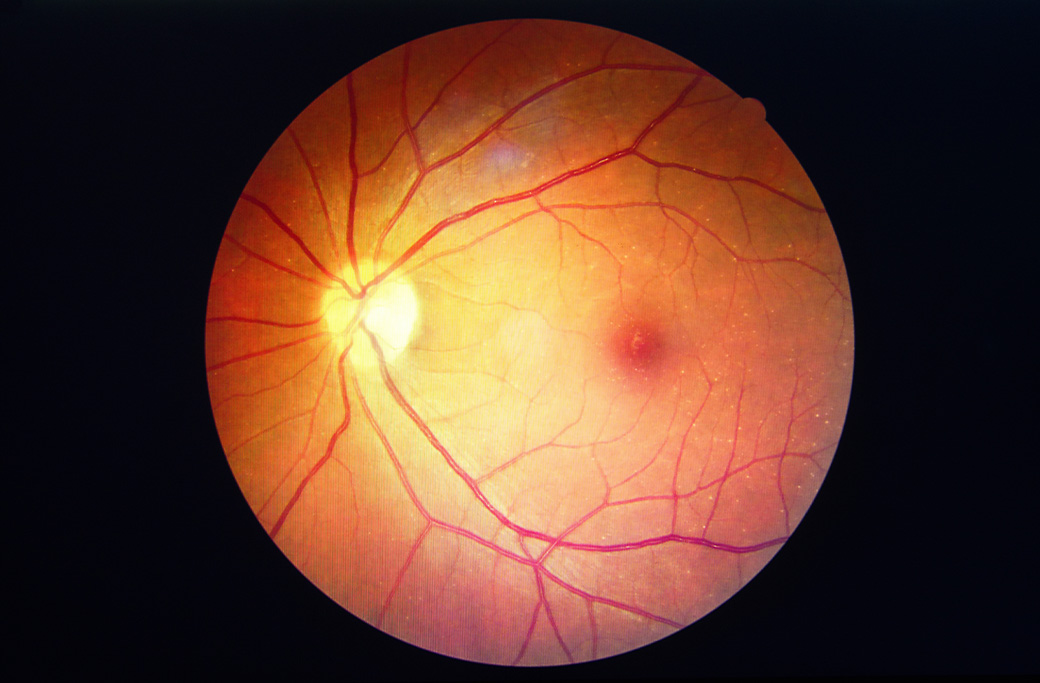
The retina lines the back of the eye and contains specialized cells that respond to light. It converts light into signals that travel through the optic nerve to the brain, where they are interpreted as the images you see.
Near the center of the retina is the macula, which supports the detailed central vision used for reading, driving and recognizing faces. Other areas of the retina contribute to peripheral vision and your ability to detect objects and movement outside the center of your visual field.
Because different retinal conditions affect different structures, symptoms can vary considerably. Changes may involve central vision, peripheral vision, color, contrast, distortion, flashes, floaters or areas of missing vision.
Some retinal diseases can also be present before a patient notices a meaningful change in sight. Learn more about the early signs of retinal disease.
What Symptoms Can Indicate a Retinal Problem?
Retinal symptoms do not identify their own cause. Similar changes in vision can occur with different eye conditions, which is why an examination is important.
Symptoms that may warrant an eye evaluation include:
-
- New or worsening floaters
- Flashes of light
- Blurred or distorted vision
- Straight lines appearing bent or wavy
- Changes in central vision
- Dark, blank or missing areas of vision
- Changes in peripheral vision
- Unexplained changes in vision related to diabetes or another medical condition
Some symptoms develop gradually and can be evaluated through an appropriately scheduled appointment. Others require much faster attention.
Which Retinal Symptoms Are an Emergency?
Seek immediate professional guidance for symptoms such as:
-
- Sudden loss of vision
- A curtain, veil or dark shadow moving across your vision
- A sudden increase or shower of new floaters
- New flashes accompanied by floaters or other vision changes
- Sudden loss of peripheral vision
- A new dark or missing area of vision
- A sudden, significant change following an eye injury
These symptoms can occur with a retinal tear, retinal detachment, bleeding inside the eye, retinal vascular problems or other potentially serious conditions.
If you are experiencing a sudden or severe change in vision, contact an eye-care professional immediately or seek emergency eye care. Do not rely on a routine online appointment request for a potentially time-sensitive eye problem.
What Conditions Do Retina Specialists Treat?
Retina specialists diagnose and manage diseases involving the retina, macula and vitreous, the clear gel that fills much of the inside of the eye.
MERSI’s current condition resources include care for several major retinal disorders.
Age-Related Macular Degeneration
Age-related macular degeneration, or AMD, affects the macula and can interfere with detailed central vision. Dry and wet AMD behave differently and require different approaches to monitoring and treatment.
MERSI also offers Valeda™ PBM for certain patients with dry AMD. Eligibility for this treatment depends on specific clinical findings and must be determined through an eye examination.
Diabetic Retinopathy and Diabetic Macular Edema
Diabetes can damage small blood vessels in the retina. Diabetic retinopathy may develop without obvious symptoms in its earlier stages, while more advanced disease can cause floaters, blurred vision, dark areas or other changes.
Diabetic macular edema occurs when fluid accumulates in the macula and can affect central vision.
Patients with diabetes should follow the eye-examination schedule recommended by their medical and eye-care teams. If diabetic retinal disease is detected, the type and frequency of specialist follow-up depend on the individual findings.
Learn more about how diabetes can affect the retina.
Retinal Tears and Retinal Detachment
A retinal tear is a break in the retina. In some cases, fluid can pass through the tear and contribute to separation of the retina from the underlying tissue, resulting in retinal detachment.
Sudden flashes, a rapid increase in floaters, a curtain or shadow in the visual field, peripheral vision loss or sudden vision loss require urgent assessment.
Retinal tears and detachments do not all require identical treatment. The appropriate response depends on what the examination shows, including the location and extent of the problem.
Epiretinal Membrane and Macular Pucker
An epiretinal membrane is a thin layer of tissue that forms on the surface of the macula. It may cause blurred or distorted central vision, including straight lines appearing wavy.
Some patients can be monitored, while others may need treatment depending on the severity of the symptoms and retinal changes.
Retinal Vascular Conditions
Problems involving the blood vessels supplying or draining the retina can cause swelling, bleeding or sudden changes in vision.
Since symptoms and treatment vary depending on the vessel involved and the extent of retinal damage, a retinal evaluation is needed to determine the diagnosis and appropriate next steps.
Inflammatory Conditions Affecting the Retina
Inflammation inside the eye can affect the retina and other ocular structures. MERSI has particular experience evaluating patients whose retinal findings occur alongside uveitis or other ocular inflammatory disease.
The appropriate treatment depends on the cause and location of the inflammation as well as the patient’s overall medical history.
What Does a Retina Specialist Do?
A retina specialist is an ophthalmologist who has completed additional subspecialty training focused on diseases of the retina and vitreous.
Retina specialists evaluate retinal symptoms, interpret specialized imaging, diagnose retinal and vitreous conditions and provide medical, laser or surgical treatment when appropriate.
Routine eye care and retina-specialist care serve different purposes. A comprehensive ophthalmologist or optometrist may identify a retinal abnormality during an examination and refer a patient for further evaluation. Patients with an established retinal diagnosis may also receive ongoing care directly from a retina specialist.
If you are unsure which type of eye doctor you need, MERSI’s guide to Retina Specialist vs. Ophthalmologist: Which Do You Need? can help explain the difference.
What Happens During a Retina Evaluation?
Your visit begins with a review of your symptoms, eye history, medical history and previous diagnoses or treatments. Your physician then determines which examinations or tests are appropriate.
A retina evaluation may include a dilated eye examination so the physician can examine the retina, macula, retinal blood vessels and vitreous.
Additional testing depends on the reason for your visit.
Optical Coherence Tomography
Optical coherence tomography, commonly called OCT, creates detailed cross-sectional images of retinal structures. It can help physicians evaluate changes such as retinal or macular swelling and abnormalities involving retinal layers.
Retinal Photography and Imaging
Retinal photographs can document the appearance of the retina and allow physicians to compare changes over time. Different imaging techniques may be selected depending on the condition being evaluated.
Fluorescein Angiography
For some patients, fluorescein angiography may be used to examine circulation through retinal blood vessels and identify areas of leakage or abnormal blood flow.
Not every patient needs every test. Your retina specialist will select testing based on your symptoms, examination findings and medical history.
How Are Retinal Conditions Treated?

There is no single treatment for retinal disease. The appropriate approach depends on the diagnosis, severity, location of the retinal changes, symptoms, previous treatment and the patient’s overall health.
Some conditions may initially be monitored. Others may require medical treatment, injections, laser treatment or surgery.
Intravitreal Injections
Medications delivered through injections into the eye are used for certain retinal diseases, including some forms of age-related macular degeneration, diabetic retinal disease and retinal vascular conditions.
The medication and treatment schedule depend on the diagnosis and the patient’s response.
Laser Treatment
Retinal laser procedures can be used for selected conditions. For example, laser may be appropriate for certain retinal tears or particular forms of diabetic retinal disease.
Whether laser is appropriate can only be determined after the retina has been examined.
Vitreoretinal Surgery
Surgery may be recommended for conditions such as some retinal detachments, epiretinal membranes, macular holes, vitreous hemorrhage and other vitreoretinal disorders.
MERSI’s ophthalmic surgery information provides additional information about vitreoretinal procedures performed by the practice.
Treatment for Dry AMD
MERSI offers Valeda™ PBM for certain patients with dry age-related macular degeneration. This treatment has specific clinical candidacy requirements, so patients should not use symptoms alone to determine whether they are eligible.
Learn more about Valeda treatment for dry AMD at MERSI and discuss your individual diagnosis with a MERSI physician.
When Should You See a Retina Specialist?
You may need retina-specialist care when:
-
- An eye examination identifies a retinal abnormality
- You have been diagnosed with a retinal or vitreous condition
- You develop new or changing retinal symptoms
- You have diabetic retinal disease or macular disease requiring specialist management
- You need evaluation for a retinal tear or detachment
- Your ophthalmologist recommends subspecialty retinal evaluation
- You are seeking another opinion about a retinal diagnosis or treatment plan
Not every person with a retinal risk factor needs ongoing retina-specialist visits. The appropriate level of care and follow-up schedule depend on your individual findings.
Retina Care at MERSI
MERSI is located in Waltham, Massachusetts and provides specialized ophthalmology care for patients from Greater Boston, elsewhere in Massachusetts and New England.
The practice includes physicians with vitreoretinal surgery and medical-retina expertise and provides diagnostic testing, medical treatment and surgical management for retinal conditions.
Peter Y. Chang, MD, FACS specializes in ocular inflammatory diseases, vitreoretinal surgery and cataract. Carl S. Wilkins, MD specializes in ocular inflammatory diseases, vitreoretinal surgery and cataract.
This combination of retinal and ocular-inflammatory expertise can be particularly relevant for patients whose retinal findings occur alongside inflammation or a more complex eye condition.
Retina Care in Waltham for Greater Boston and New England
MERSI is located at:
1440 Main Street, Suite 201
Waltham, MA 02451
For patients with a diagnosed or suspected retinal condition, the Waltham location provides access to specialized retinal evaluation outside downtown Boston.
Request a Retina Evaluation at MERSI
If you have been diagnosed with a retinal condition, have been referred for specialized retinal care, or have persistent vision changes that need further evaluation, request an appointment with MERSI at our Waltham office.
If you are experiencing sudden vision loss, a curtain or shadow across your vision, a sudden increase in flashes or floaters, or another abrupt severe change in vision, seek immediate professional guidance rather than relying on a routine online appointment request.
Frequently Asked Questions About Retina Care
What does a retina specialist do?
A retina specialist diagnoses and treats diseases involving the retina and vitreous. Care may include specialized imaging, medical management, injections, laser procedures or vitreoretinal surgery depending on the condition.
Do I need a retina specialist for floaters?
Not everyone with an occasional longstanding floater needs ongoing retina-specialist care. New floaters, a sudden increase in floaters, or floaters accompanied by flashes, shadows or vision loss should be evaluated promptly. Learn more about flashes and floaters.
Can retinal disease occur without symptoms?
Yes. Some retinal conditions can be present before noticeable symptoms develop. This is one reason appropriate comprehensive eye examinations and condition-specific monitoring are important.
Is every retinal condition an emergency?
No. Some retinal conditions are monitored over time, while others require prompt or immediate evaluation. Sudden vision loss, a curtain or shadow, or sudden flashes and numerous new floaters can indicate a time-sensitive problem.
Can retinal conditions be treated?
Many retinal conditions have treatment or management options, but treatment varies substantially by diagnosis and severity. Some conditions can be monitored, while others may require medication, injections, laser treatment or surgery. An examination is needed to determine what is appropriate for an individual patient.
How often should I see a retina specialist?
There is no single schedule for everyone. Follow-up frequency depends on the diagnosis, disease activity, treatment and individual risk factors. Your ophthalmologist or retina specialist will recommend a schedule based on your findings.
Medically reviewed by:
Stephen D. Anesi, MD, FACS, Partner & Co-President
Specializes in: Ocular inflammatory diseases, cornea, glaucoma (medical, surgical & MIGS), cataract, and medical retina
Peter Y. Chang, MD, FACS, Partner & Co-President
Specializes in: Ocular inflammatory diseases, vitreoretinal surgery, and cataract
Carl S. Wilkins, MD
Specializes in: Ocular inflammatory diseases, vitreoretinal surgery, and cataract
Reviewed: April 29, 2026