
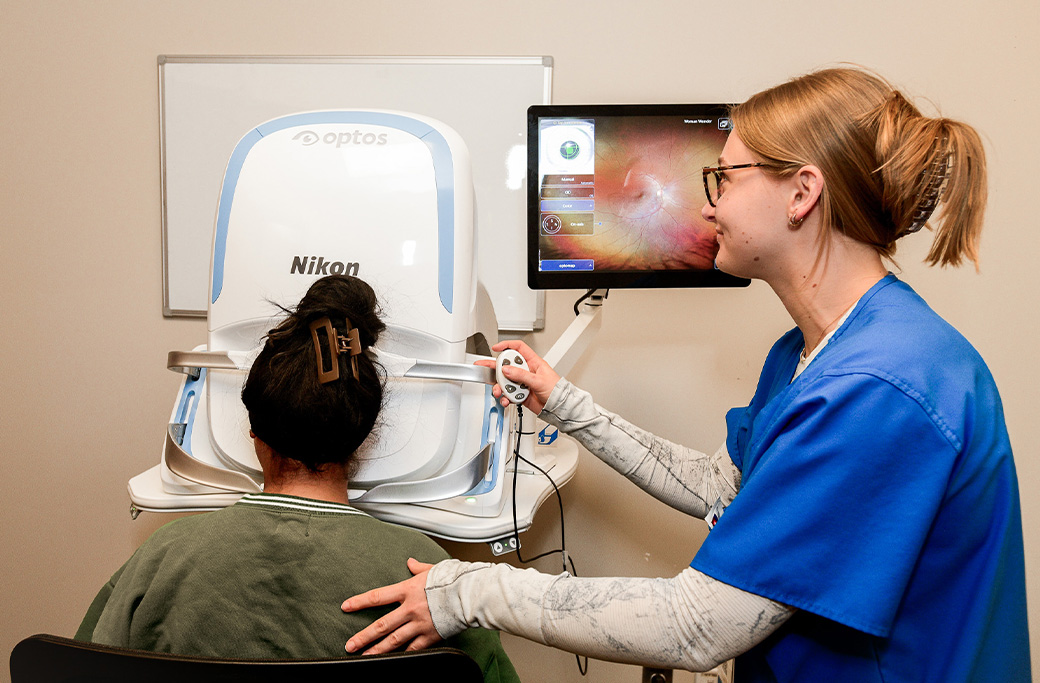
Quick answer: Sudden vision changes, including blurry vision, flashes of light, new floaters, distorted vision, or vision loss, should be evaluated promptly by an eye specialist. While some causes are minor, symptoms may also signal serious conditions, such as retinal detachment, retinal vascular occlusion, or eye inflammation that require timely treatment.
A sudden change in vision is hard to ignore. One moment your eyesight is clear, and the next, something feels off. You might notice a dark shadow creeping across your visual field, a sudden burst of flashing lights, or a blur that wasn’t there an hour ago.
These changes range from harmless to sight-threatening. The difficulty is that many serious eye conditions share symptoms with minor ones, making it nearly impossible to self-diagnose. That’s why understanding what sudden vision changes can mean (and understanding when to seek care) matters so much.
At the Massachusetts Eye Research and Surgery Institution (MERSI), fellowship-trained specialists evaluate complex vision changes using advanced diagnostic imaging to determine the underlying cause and create an individualized treatment plan. This guide explains what sudden vision changes are, what commonly causes them, and how to know when your symptoms require urgent attention.
What Are Sudden Vision Changes?

Sudden vision changes are any noticeable, unexpected shift in the way you see—changes that appear quickly, sometimes within seconds or minutes, rather than developing gradually over months or years.
These changes can affect one eye or both, may be temporary or persistent, and can vary widely in how they appear. Common types of sudden vision changes include:
-
- Blurry vision — Objects that were previously clear become out of focus
- Loss of vision — A partial or complete reduction in sight in one or both eyes
- Flashes of light — Brief bursts or streaks of light, often in the peripheral field
- New floaters — Spots, strings, or web-like shapes drifting across your vision
- Distorted vision — Straight lines appear wavy or bent
- Dark spots or shadows — Areas of darkness or gray within your visual field
- Loss of peripheral vision — Difficulty seeing objects to the sides
Not every symptom on this list signals an emergency, but all of them deserve attention, particularly when they appear suddenly or worsen quickly. If blurriness appears unexpectedly, learn when sudden blurry vision can be serious and which warning signs deserve prompt attention.
When Are Sudden Vision Changes a Medical Emergency?
Some sudden vision changes require urgent evaluation, not a scheduled appointment next week, but same-day or emergency care. Time is often an important factor. Conditions like retinal detachment can result in permanent vision loss if not treated within hours.
Seek Immediate Eye Care If You Notice:
-
- Sudden loss of vision in one or both eyes, even if temporary
- A curtain, shadow, or dark area moving across your vision
- A sudden increase in floaters, especially with flashes of light
- New flashes of light appearing in your peripheral vision
- Sudden loss of peripheral vision
- New distortion or missing areas of vision
New flashes or floaters following a blow to the eye or head also require prompt evaluation. Learn how sports-related eye trauma can cause a retinal tear or detachment and which symptoms require urgent care.
These symptoms can indicate a retinal tear, retinal detachment, retinal vascular occlusion, or another condition that requires time-sensitive intervention. Do not wait to see whether these symptoms improve on their own. If you experience a sudden significant change in vision, contact a specialist immediately.
What Are the Most Common Causes of Sudden Vision Changes?

What Retinal Conditions Can Cause Sudden Vision Changes?
The retina is the light-sensitive tissue lining the back of the eye. It converts what you see into signals sent to the brain. When the retina is damaged or displaced, vision changes follow quickly and often dramatically.
Retinal conditions that can affect vision include:
-
- Retinal tears — A break in the retinal tissue, often preceded by new floaters or flashes. Left untreated, a tear can progress to detachment.
- Retinal detachment — When the retina separates from the underlying tissue. This is a medical emergency. Symptoms include sudden floaters, light flashes, and a curtain-like shadow over part of your vision.
- Macular problems — Conditions affecting the macula (the center of the retina) can cause blurry or distorted central vision.
- Retinal vascular occlusions — Blockages in the blood vessels of the retina can cause sudden, painless vision loss.
Patients experiencing these symptoms may benefit from MERSI’s comprehensive retina care and specialist expertise.
How Does Diabetic Eye Disease Cause Sudden Vision Changes?
Diabetes affects blood vessels throughout the body, including those in the eye. Over time, this damage leads to two primary conditions:
-
- Diabetic retinopathy — Abnormal blood vessels form in the retina, which may leak or bleed, causing vision changes ranging from mild blurring to significant loss.
- Diabetic macular edema (DME) — Fluid accumulates in the macula, distorting central vision.
Both conditions can progress without early symptoms, making regular monitoring critical for people with diabetes. If you have been diagnosed with diabetes and notice any change in vision, prompt evaluation by a diabetic retinopathy specialist near Boston is strongly recommended.
Can Macular Degeneration Cause Sudden Vision Changes?
Macular degeneration (AMD) is typically associated with gradual vision loss, but certain forms can cause more rapid changes:
-
- Wet AMD occurs when abnormal blood vessels grow under the retina and leak fluid. Vision can deteriorate quickly, particularly in the central field.
- Geographic atrophy (advanced dry AMD) progresses more slowly, but can accelerate under certain conditions.
A common early symptom of macular degeneration is distorted central vision—straight lines that appear wavy or bent, such as when reading or looking at a grid. Patients with AMD deserve ongoing monitoring and may benefit from advanced treatments now available at MERSI, including Valeda Light Therapy for dry AMD—the first and only FDA-authorized treatment of its kind.
For those seeking specialized care, MERSI offers a dedicated macular degeneration specialist near Boston.
Can Eye Inflammation (Uveitis) Cause Vision Changes?
Uveitis is inflammation inside the eye. It can cause redness, pain, light sensitivity, and significant vision changes, including blurriness, floaters, and in severe cases, vision loss.
Uveitis is often related to autoimmune conditions, systemic diseases, or infections. Since it can affect multiple structures within the eye and progress rapidly without treatment, specialist evaluation is essential.
At MERSI, uveitis specialists and ocular immunology specialists bring advanced fellowship training in diagnosing and managing these complex inflammatory conditions, including cases where eye inflammation is driven by underlying systemic disease.
Can Cataracts Cause Sudden Vision Changes?
Cataracts (a clouding of the eye’s natural lens) typically develop slowly over years. Most people notice a gradual increase in blurriness, glare sensitivity, or difficulty in low-light conditions. A sudden change in vision is less commonly associated with cataracts alone.
That said, cataracts may contribute to visual disturbances, and their presence can sometimes complicate the evaluation of other conditions. A complete eye evaluation is always necessary to determine whether cataracts are the primary cause of a change in vision, or whether another condition is also at play.
Sudden Vision Changes After an Eye Procedure
Some patients notice changes in their vision after eye procedures, including cataract surgery, retinal treatments, or injections. While some temporary symptoms can occur during recovery, new or worsening vision changes should always be discussed with your eye care team.
Contact your ophthalmologist promptly if you experience:
-
-
- Sudden decrease in vision after surgery
- New flashes or floaters after a procedure
- Increasing distortion or blurry vision
- A dark shadow or curtain-like area in your vision
- New pain, redness, or light sensitivity
-
Patients receiving retinal injections or undergoing retinal procedures should follow their specialist’s instructions closely and report unexpected vision changes promptly.
Sudden Vision Changes in One Eye vs. Both Eyes: Does It Matter?
Yes. Understanding whether vision changes affect one eye or both can provide important diagnostic information.
Changes in one eye are more commonly associated with:
-
- Retinal conditions (tear, detachment, vascular occlusion)
- Vascular problems affecting blood supply to the eye
- Localized inflammation or uveitis
Changes affecting both eyes may suggest:
-
- Systemic conditions (such as uncontrolled blood pressure or autoimmune disease)
- Medication side effects
- Neurologic causes, including conditions involving the optic nerve or visual pathways
It’s worth noting that some people are unaware that a vision change affects only one eye, particularly if it develops gradually. Covering each eye individually can help clarify which eye is affected. Either way, new or worsening vision changes in one or both eyes warrant a professional evaluation.
What Happens During an Evaluation for Sudden Vision Changes at MERSI?
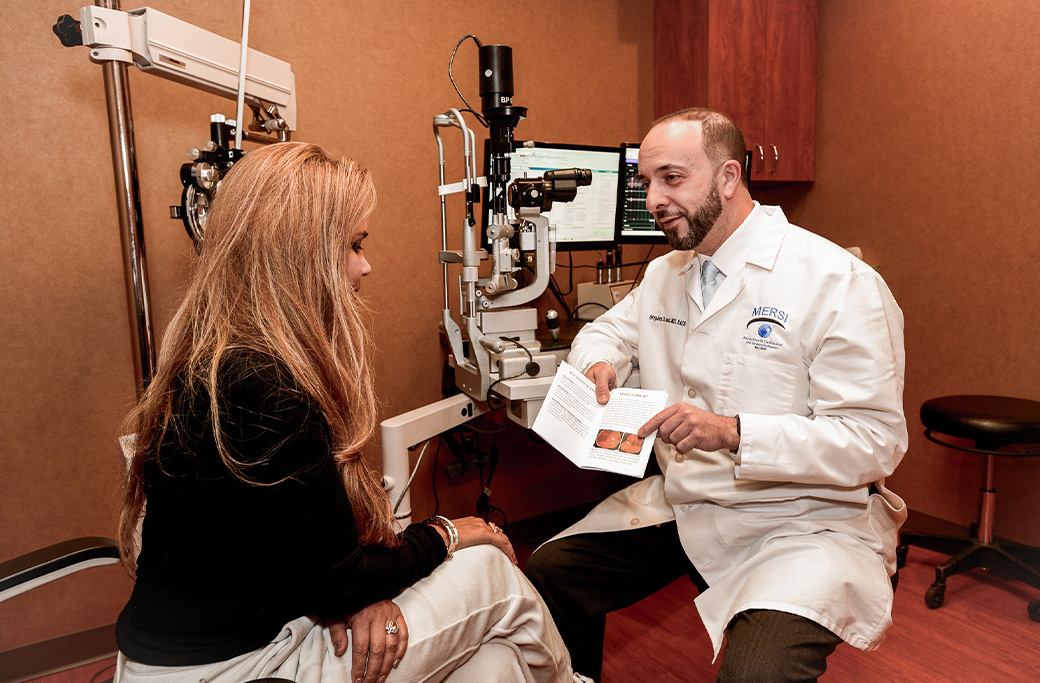
When a patient presents with sudden vision changes, MERSI’s specialists conduct a structured, thorough evaluation designed to identify the cause accurately and quickly. This may include:
-
- Comprehensive eye examination — A detailed review of visual acuity, eye pressure, and structural health
- Dilated eye exam — Dilation allows the specialist to examine the retina, optic nerve, and peripheral areas in detail
- OCT imaging (Optical Coherence Tomography) — A non-invasive scan that produces high-resolution cross-sectional images of the retina, enabling precise detection of structural changes
- Retinal photography — High-resolution imaging of the retina to document findings and monitor changes over time
- Fluorescein angiography — When appropriate, a dye-based imaging technique that visualizes blood flow through the retinal vessels and identifies areas of leakage or blockage
- Review of medical history — Including any systemic conditions (diabetes, autoimmune disease, hypertension) that may be contributing to the vision change
MERSI’s Waltham facility provides advanced diagnostic testing to help quickly identify the cause of urgent vision changes.
When Should You See a Retina Specialist?
A general eye exam with an ophthalmologist is a good starting point, but certain symptoms and diagnoses benefit from the focused expertise of a fellowship-trained retina specialist. Consider scheduling a retina evaluation at MERSI if you are experiencing:
-
- New flashes of light or a sudden increase in floaters
- Any degree of vision loss, whether partial or complete
- Distorted vision, especially in the central field
- A shadow, curtain, or dark area in your visual field
- Vision changes related to diabetic eye disease
- Symptoms consistent with macular conditions
- Known or suspected retinal disorders requiring ongoing management
The right timing depends on the symptom and underlying condition. Learn how quickly you should see a retina specialist and which symptoms may require immediate evaluation.
Early evaluation gives specialists the best opportunity to intervene before permanent damage occurs. Many retinal conditions (including tears and certain forms of AMD) are highly treatable when caught promptly.
MERSI’s team, led by nationally recognized retina and uveitis specialists, provides the diagnostic depth and subspecialty expertise needed to evaluate even the most complex cases. Dr. Peter Y. Chang, named one of Newsweek’s Best Eye Doctors in America (2023), and Dr. Stephen D. Anesi, a five-time Castle Connolly Top Doctor, together bring decades of advanced training in retinal surgery, ocular immunology, and inflammatory eye disease.
Don’t wait on vision changes that concern you. Schedule an evaluation at MERSI or call 781-891-6377 to speak with our team.
Frequently Asked Questions About Sudden Vision Changes
Can sudden blurry vision be serious?
Sudden blurry vision can be serious, depending on the cause. While some cases are related to minor factors (i.e. dry eyes or eye fatigue) others may indicate retinal disease, vascular problems, or inflammation inside the eye. If blurry vision appears quickly and does not resolve, a prompt evaluation by an eye specialist is recommended to rule out sight-threatening causes.
Is sudden vision loss always an emergency?
Sudden vision loss should always be treated as a potential emergency until a specialist determines otherwise. Even brief or partial episodes of vision loss can indicate a retinal vascular occlusion, retinal detachment, or other serious condition. Delaying care can reduce the window for effective treatment. Contact an eye specialist immediately if you experience any sudden loss of vision.
Why am I seeing flashes of light in my vision?
Flashes of light typically occur when the vitreous (the gel-like substance inside the eye) pulls on the retina, stimulating it and creating the perception of light. This is most common as people age and the vitreous liquefies and shrinks. While occasional flashes can be benign, a sudden increase in flashes (particularly when accompanied by new floaters or a shadow in your vision) can indicate a retinal tear or detachment, which requires urgent evaluation.
When should I worry about new eye floaters?
New floaters are common and often harmless, but they become a concern when they appear suddenly and in large numbers, or when they are accompanied by flashes of light or changes in peripheral vision. These combinations of symptoms can signal a retinal tear or detachment. Anyone who notices a sudden shower of new floaters should seek same-day evaluation from a retina specialist. Learn more about when new floaters should be evaluated by a retina specialist.
Can eye inflammation cause sudden vision changes?
Yes. Uveitis—inflammation inside the eye—can cause blurry vision, floaters, light sensitivity, and in more severe cases, significant vision loss. Because uveitis can progress rapidly and is often linked to underlying autoimmune or systemic conditions, it requires prompt evaluation by a specialist with expertise in ocular inflammatory disease.
Should I see a general eye doctor or a retina specialist for sudden vision changes?
For sudden vision changes (especially those involving flashes, floaters, vision loss, shadows, or distortion) a retina specialist is often the most appropriate first or next step. General eye exams can identify many conditions, but retinal and inflammatory eye diseases benefit from the focused diagnostic tools and subspecialty training that fellowship-trained specialists provide. MERSI’s team in Waltham accepts urgent referrals and can provide same-day diagnostic testing for time-sensitive cases.