
Quick Answer: Patients seeking uveitis treatment near Waltham, MA can receive specialized care at the Massachusetts Eye Research and Surgery Institution (MERSI). Our fellowship-trained retina and uveitis specialists evaluate and treat complex inflammatory eye diseases using advanced imaging, laboratory testing, and personalized treatment plans designed to protect long-term vision.
Specialized Uveitis Care in Waltham, Massachusetts
Uveitis is an inflammatory eye condition that affects structures inside the eye, including the iris, retina, and surrounding tissues. Due to the fact that inflammation can progress quickly and threaten vision, early diagnosis and specialized treatment are essential.
Unlike routine eye care, uveitis often requires a deeper evaluation to understand where inflammation is occurring, why it developed, and how to prevent future damage.
At MERSI in Waltham, patients have access to subspecialty expertise focused on diagnosing and treating complex inflammatory eye conditions.
What Is Uveitis?
Uveitis occurs when inflammation develops in the uvea, the middle layer of the eye. Depending on where inflammation occurs, it may affect the front, middle, or back of the eye.
Types of uveitis include:
-
- Anterior uveitis
- Intermediate uveitis
- Posterior uveitis
- Panuveitis
Symptoms may include:
-
- Eye redness
- Eye pain
- Light sensitivity
- Floaters
- Blurred vision
- Decreased vision
Since uveitis can sometimes be linked to autoimmune disease, infections, or unknown causes, determining the source of inflammation is an important part of treatment.
Conditions Treated at MERSI
MERSI provides specialized evaluation and treatment for inflammatory eye conditions including:
Uveitis
Inflammation inside the eye that may affect vision if not properly controlled.
Autoimmune-Related Eye Inflammation
Some patients develop uveitis as part of systemic inflammatory conditions such as:
-
- Rheumatoid arthritis
- Lupus
- Psoriatic arthritis
- Ankylosing spondylitis
- Sarcoidosis
Other Ocular Inflammatory Conditions
MERSI also evaluates and treats:
-
- Scleritis
- Ocular cicatricial pemphigoid
- Other complex inflammatory eye disorders
Advanced Diagnosis for Uveitis
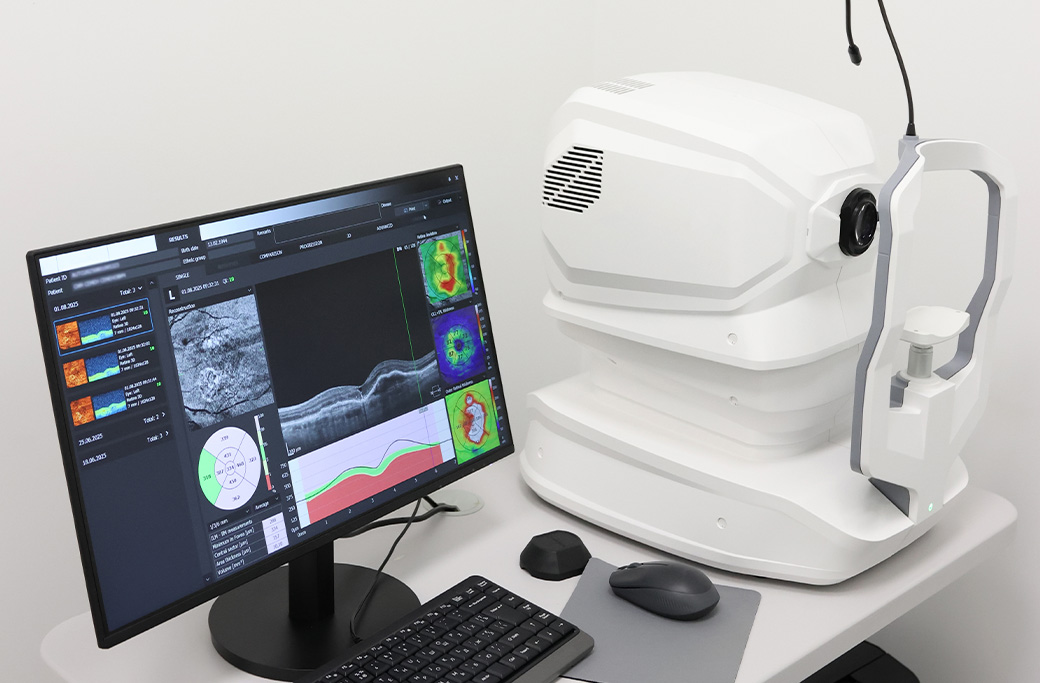
Accurate diagnosis is one of the most important steps in protecting vision.
A uveitis evaluation may include:
-
- Comprehensive eye examination
- Slit-lamp examination
- Dilated retinal examination
- Optical coherence tomography (OCT)
- Fundus photography
- Fluorescein angiography when needed
- Laboratory testing
These advanced diagnostic tools help specialists determine the location, severity, and possible cause of inflammation.
Personalized Uveitis Treatment Options

Every patient’s treatment plan is different.
Treatment depends on:
-
- Type of uveitis
- Severity of inflammation
- Underlying cause
- Response to previous treatments
Treatment options may include:
Corticosteroid Therapy
Steroids may be used to quickly reduce inflammation during active disease.
Immunomodulatory Therapy
Some patients require medications that regulate immune system activity to control chronic inflammation.
Advanced Infusion Therapy
Patients with severe or difficult-to-control inflammatory eye disease may benefit from IV infusion therapy.
MERSI offers specialized ophthalmic infusion services, allowing patients to receive advanced treatment with close physician oversight.
Why Choose MERSI for Uveitis Treatment?

Uveitis requires specialized knowledge because inflammation can affect multiple parts of the eye and may involve the immune system.
Patients choose MERSI because they have access to:
Fellowship-Trained Specialists
Our physicians have advanced expertise in retina and inflammatory eye disease.
Advanced Diagnostic Technology
MERSI uses detailed imaging and laboratory evaluation to identify the cause of inflammation.
Comprehensive Treatment Options
From medication management to infusion therapy, patients receive coordinated care based on their individual needs.
Long-Term Monitoring
Chronic uveitis often requires ongoing follow-up to prevent complications and protect vision.
Convenient Uveitis Care Near Boston
Located in Waltham, Massachusetts, MERSI provides specialized uveitis care for patients throughout Greater Boston and surrounding communities.
Patients from Boston, Newton, Lexington, Belmont, Weston, and MetroWest communities can access advanced inflammatory eye disease evaluation and treatment without traveling to a large hospital system.
As a nationally recognized ophthalmology practice, MERSI is trusted by patients seeking advanced retina and uveitis expertise. Our fellowship-trained specialists have earned recognition for their clinical expertise in diagnosing and treating complex eye conditions, making MERSI a leading destination for patients seeking a Boston retina and uveitis specialist.
When Should You See a Uveitis Specialist?
You should schedule an evaluation if you experience:
-
- Persistent eye redness
- Eye pain or pressure
- Light sensitivity
- New floaters
- Flashes of light
- Sudden vision changes
Prompt evaluation can help prevent complications and protect long-term vision.
Schedule a Uveitis Evaluation at MERSI
Uveitis can be complex, but early diagnosis and specialized treatment can make a significant difference in protecting your vision. At MERSI in Waltham, our retina and uveitis specialists provide advanced diagnostic testing, personalized treatment plans, and ongoing management for patients with inflammatory eye disease.
Schedule a uveitis evaluation at MERSI and take the next step toward protecting your vision.
Frequently Asked Questions
What is the best treatment for uveitis?
Treatment depends on the type and cause of inflammation. Options may include steroids, immunomodulatory medications, injections, or infusion therapy.
Is uveitis serious?
Yes. Untreated uveitis can lead to complications including cataracts, glaucoma, retinal damage, and vision loss.
How quickly should uveitis be treated?
Uveitis should be evaluated promptly because ongoing inflammation may permanently damage structures inside the eye.
Does MERSI treat chronic uveitis?
Yes. MERSI provides ongoing evaluation and management for patients with chronic and recurrent uveitis.