
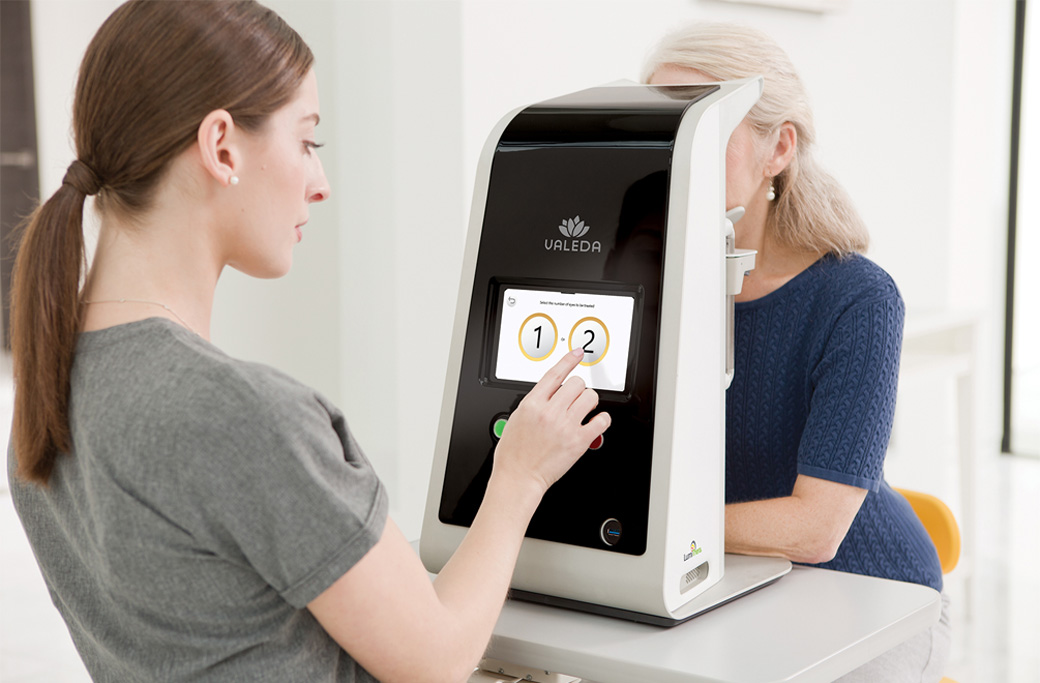
VALEDA Treatment for Dry AMD at MERSI
Quick answer: VALEDA is a noninvasive, FDA-authorized photobiomodulation treatment intended to improve visual acuity in certain adults with dry age-related macular degeneration. Not every person with dry AMD is eligible. A retinal examination and diagnostic imaging are needed to determine whether VALEDA is appropriate for a particular patient.
MERSI offers VALEDA treatment at our Waltham practice for eligible patients from Greater Boston and throughout New England. Our retina specialists evaluate the type and stage of macular degeneration, review each patient’s current vision and retinal imaging, and explain what treatment may realistically accomplish.
What Is VALEDA Treatment?
VALEDA is an in-office treatment for certain patients with dry age-related macular degeneration, or dry AMD. It uses photobiomodulation, sometimes called PBM, to deliver specific wavelengths of light to retinal tissue.
Unlike an eye injection or surgical procedure, VALEDA does not place medication or an implant inside the eye. Treatment is delivered through the Valeda Light Delivery System while the patient looks into the device.
The FDA authorized marketing of VALEDA in November 2024 to help improve vision in certain patients with dry AMD. The authorization applies to a defined patient population; it does not mean that every person with dry AMD will qualify or experience the same result. The FDA describes VALEDA as the first therapeutic option authorized for adult patients with dry AMD.
What Is Dry Age-Related Macular Degeneration?
Dry AMD affects the macula, the central part of the retina responsible for detailed vision. You use central vision to read, drive, recognize faces and see objects directly in front of you.
Dry AMD may develop gradually and without pain. Some people have few noticeable symptoms during the early stages. As the condition progresses, patients may experience:
-
- Blurry or hazy central vision
- A need for brighter light when reading
- Reduced contrast or color intensity
- Difficulty recognizing faces
- Straight lines that appear bent or wavy
- Dark, blurry or missing areas in central vision
Learn more about the condition, its diagnosis and other management options in MERSI’s guide to dry macular degeneration and VALEDA therapy.
Sudden distortion, sudden vision loss or a rapid new change should not be assumed to be ordinary dry AMD progression. Contact an eye-care professional promptly for guidance.
How Does VALEDA Photobiomodulation Work?
The retina requires considerable cellular energy to process visual information. In dry AMD, age-related changes can interfere with the health and function of retinal cells.
VALEDA delivers three wavelengths of light. This process is intended to influence cellular activity associated with energy production and retinal-cell function. The treatment does not remove drusen, cure macular degeneration or restore retinal cells that have already been permanently lost.
The goal is to improve visual acuity in appropriately selected patients. Individual results vary, and a retina specialist should explain the expected benefits and limitations based on the patient’s examination and imaging.
Who May Be a Candidate for VALEDA?
Eligibility depends on more than simply having a dry AMD diagnosis.
A MERSI retina specialist may consider:
-
- Whether the patient has dry rather than wet AMD
- The appearance, size and number of drusen
- Whether geographic atrophy is present and where it is located
- The patient’s best-corrected visual acuity
- Retinal imaging findings
- Other retinal or eye conditions
- Medical history and factors that could affect treatment
The authorized indication includes specific clinical criteria. Patients should not use general descriptions online to decide whether they qualify.
VALEDA is not authorized to treat wet AMD. Patients with wet AMD may require different monitoring or treatment, including therapies directed at abnormal blood-vessel growth. A comprehensive retinal evaluation is necessary to distinguish these conditions.
What Happens During a VALEDA Evaluation at MERSI?
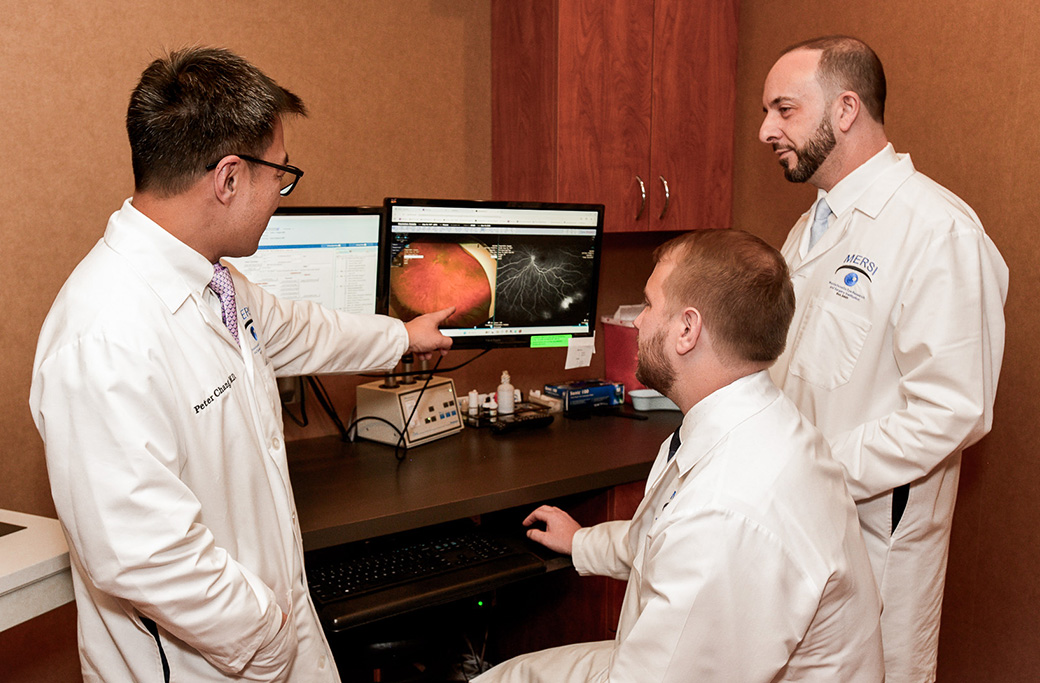
The first step is a specialized retinal evaluation. Depending on the patient’s history and findings, the visit may include:
-
- A review of symptoms and previous AMD care
- Measurement of visual acuity
- A dilated retinal examination
- Optical coherence tomography, or OCT
- Additional retinal imaging when appropriate
- Review of medications, supplements and existing eye conditions
The retina specialist will determine whether the findings match the treatment’s authorized indication and whether another approach is more appropriate.
If VALEDA is recommended, the MERSI team will explain the treatment schedule, what the patient will experience during each visit, potential benefits, known risks and how the retina will be monitored.
What Is VALEDA Treatment Like?
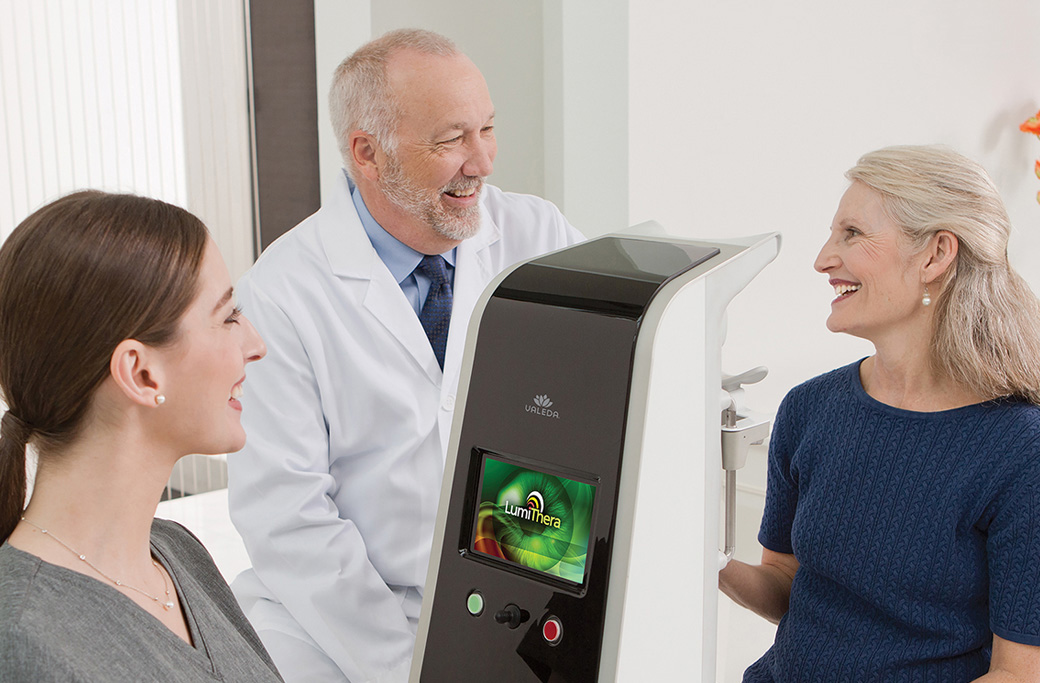
VALEDA is performed in the office and does not require an incision or eye injection. Patients look into the treatment device while controlled wavelengths of light are delivered.
A complete treatment regimen involves multiple applications over a series of treatment courses. The precise schedule should be confirmed with MERSI because it is based on the authorized treatment protocol and the physician’s recommendation.
Patients should keep all monitoring appointments even if their vision feels stable. Dry AMD can change over time, and treatment with VALEDA does not eliminate the need to watch for progression or conversion to wet AMD.
What Results Can Patients Expect?
VALEDA is intended to improve visual acuity in eligible patients, but it is not a cure for dry AMD. It cannot guarantee that vision will improve, prevent every form of progression or restore areas of permanent retinal damage.
In the clinical evidence reviewed by the FDA, treatment produced an average visual-acuity improvement equivalent to approximately one line on an eye chart after about two years. That average should not be interpreted as a guaranteed result for an individual patient.
A MERSI retina specialist can explain:
-
- Whether a patient matches the authorized treatment population
- What improvement or stabilization might reasonably mean
- How results will be measured
- Which retinal changes still require monitoring
- Whether other AMD-management recommendations remain appropriate
Does VALEDA Replace Other Dry AMD Care?
No. VALEDA does not replace comprehensive retinal care.
Depending on the patient’s AMD stage and overall health, a physician may also discuss:
-
- Regular dilated retinal examinations and imaging
- Monitoring vision changes at home
- Smoking cessation
- Management of cardiovascular risk factors
- Nutrition
- AREDS2 supplements for appropriate patients
- Prompt evaluation of new distortion or vision loss
Supplements should be taken only when recommended for the patient’s AMD stage and medical needs.
Why Choose MERSI for VALEDA Treatment?
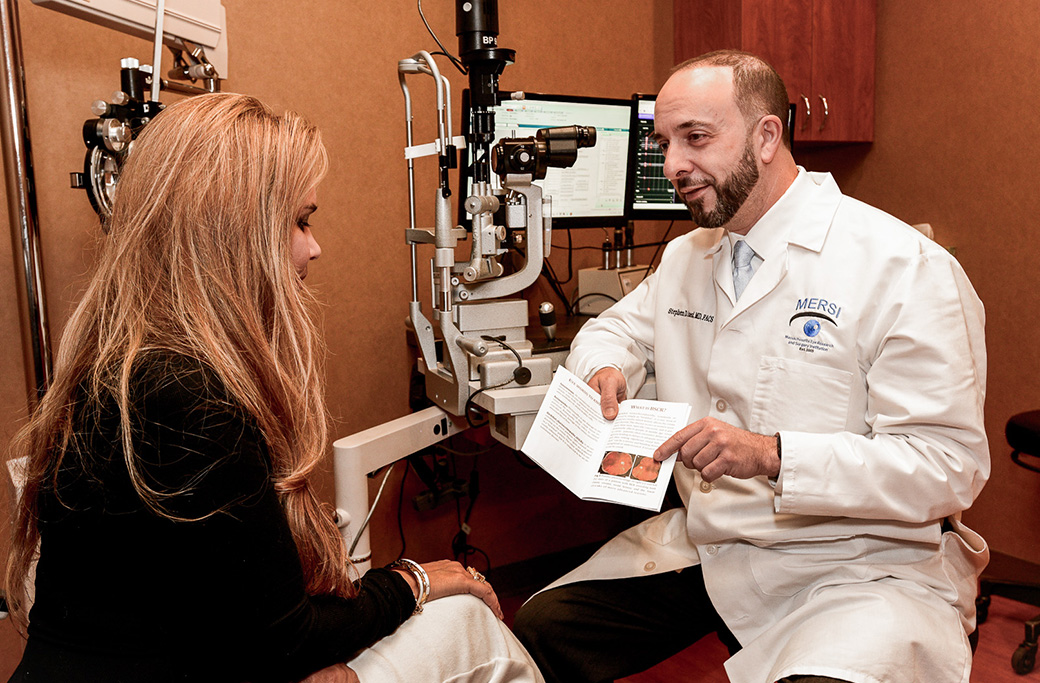
MERSI provides specialized medical and surgical retina care at our Waltham practice. Patients can receive candidacy evaluation, retinal imaging, treatment and ongoing monitoring through one coordinated team.
Our specialists manage dry and wet AMD along with other complex retinal conditions. This broader expertise matters because changes in central vision can have more than one possible cause, and an accurate diagnosis must come before treatment.
Patients seeking additional information about specialist care can visit our Retina Care at MERSI guide or learn about working with a macular degeneration specialist near Boston.
Schedule a VALEDA Evaluation at MERSI
If you have been diagnosed with dry AMD and want to know whether VALEDA may be appropriate, schedule an evaluation with a MERSI retina specialist.
The examination will help determine your type and stage of AMD, whether you meet the treatment criteria, and what next steps make sense for your vision.
Request an appointment with MERSI or call 781-891-6377.
If you experience sudden distortion, sudden vision loss or another abrupt change, contact an eye-care professional immediately rather than relying on a routine online appointment request.
This page provides general educational information and does not replace individualized medical advice, diagnosis or treatment.
Medically reviewed by:
Stephen D. Anesi, MD, FACS, Partner & Co-President
Specializes in: Ocular inflammatory diseases, cornea, glaucoma (medical, surgical & MIGS), cataract, and medical retina
Peter Y. Chang, MD, FACS, Partner & Co-President
Specializes in: Ocular inflammatory diseases, vitreoretinal surgery, and cataract
Carl S. Wilkins, MD
Specializes in: Ocular inflammatory diseases, vitreoretinal surgery, and cataract
Reviewed: August 27. 2026
Frequently Asked Questions
Is VALEDA FDA approved for dry AMD?
VALEDA received FDA De Novo marketing authorization in November 2024 for a defined group of adult patients with dry AMD. “FDA-authorized” is the more precise terminology for this device. Eligibility must be determined through an examination.
Is VALEDA a laser treatment?
No. VALEDA uses light-emitting diodes to deliver photobiomodulation. It is not retinal laser surgery and does not cut, burn or remove retinal tissue.
Does VALEDA require eye injections?
No. VALEDA is a noninvasive light-based treatment. It does not involve an eye injection, incision or implanted device.
Can VALEDA cure dry macular degeneration?
No. VALEDA does not cure dry AMD. It is intended to improve visual acuity in appropriately selected patients. Individual outcomes vary, and continued retinal monitoring remains necessary.
Can VALEDA treat wet macular degeneration?
No. VALEDA is not authorized to treat wet AMD. Wet AMD involves abnormal blood vessels and requires a different evaluation and treatment approach.
Where can I receive VALEDA treatment near Boston?
MERSI offers VALEDA evaluations and treatment at 1440 Main Street in Waltham, Massachusetts, serving patients from Greater Boston and throughout New England.