
Your retina needs attention throughout your life, not only after you notice a change in your vision. Some retinal conditions are inherited or associated with eye injuries, while others become more likely with diabetes, increasing age, or changes inside the eye. Due to certain retinal diseases developing without early pain or obvious symptoms, appropriate preventive eye care remains important even when your vision seems normal.
World Retina Day, observed on September 27, provides a timely reminder to understand what the retina does, how retinal risks can change with age, and which symptoms require urgent evaluation. Although not every retinal condition can be prevented, early detection and prompt treatment may help protect vision.
What Does the Retina Do?
The retina is a thin layer of light-sensitive tissue lining the back of the eye. It receives the light entering your eye and converts it into signals that travel through the optic nerve to the brain.
The retina makes it possible to recognize faces, read, drive, see colors, detect movement and navigate in dim lighting. Different parts of the retina perform different jobs.
The macula, located near the center of the retina, provides the detailed central vision needed for reading and recognizing faces. The surrounding retina contributes to peripheral vision and helps you detect objects and movement outside the center of your visual field.
Because the retina is essential to so many aspects of vision, damage can affect central vision, peripheral vision, night vision, visual clarity or several of these functions at once. Learn more in our complete guide to retina care, diagnosis and treatment at MERSI.
Can Retinal Disease Develop Without Pain?
Yes. Some retinal diseases can develop or progress without causing pain, and several may produce few noticeable symptoms during their early stages.
For example, early diabetic retinopathy commonly causes no obvious symptoms. Early age-related macular degeneration may also be present before a person notices a meaningful change in vision. This is one reason that waiting for pain or significant vision loss is not a reliable approach to retinal health.
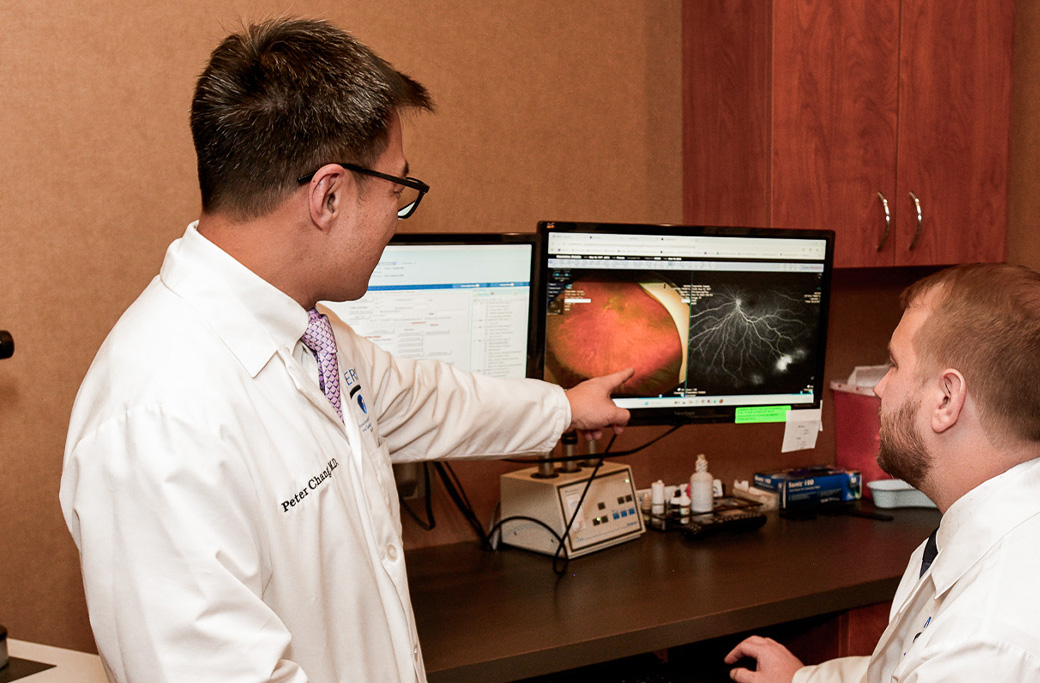
A dilated eye examination allows an eye doctor to examine the retina for changes that may not yet be affecting day-to-day vision. Learn more about the early signs of retinal disease.
How Do Retinal Risks Change Throughout Life?
Retinal health matters at every age, but the conditions and circumstances that deserve attention can change over time.
Childhood and Adolescence
Some inherited retinal disorders begin during childhood or adolescence. Early signs can include difficulty seeing in dim light, slow adjustment between light and darkness, problems with peripheral vision or unexplained changes in visual function.
Parents should mention a family history of inherited retinal disease or unexplained early vision loss to their child’s eye doctor. A child who regularly trips in dim lighting, struggles to adjust to darkness or experiences an unexplained decline in vision may need further evaluation.
Sports and recreational injuries are another important concern. A direct blow from a ball, puck, racquet, elbow or other object can injure structures inside the eye, including the retina. Proper sports-specific protective eyewear can reduce the risk of serious eye injury.
Routine pediatric vision care and an evaluation after a significant eye injury serve different purposes. A child with sudden vision changes following an injury should be evaluated promptly rather than waiting for the next routine examination.
Young and Middle Adulthood
Retinal disease is not limited to older adults. During early and middle adulthood, retinal health may be affected by:
-
- Diabetes
- High blood pressure or other vascular conditions
- Severe nearsightedness
- Autoimmune or inflammatory disease
- Eye injuries
- A personal or family history of retinal disease
Diabetes is especially important because prolonged high blood sugar can damage the small blood vessels that supply the retina. The early stages may not cause noticeable symptoms, even while retinal changes are developing.
People with diabetes should follow their medical and eye-care teams’ recommendations for dilated retinal examinations. MERSI’s resources explain how diabetes can damage the retina and how often people with diabetes may need retinal examinations.
Adults should also take eye injuries seriously. New flashes, floaters, shadows, distortion or vision loss after trauma require timely professional assessment.
Later Adulthood
Several retinal changes and diseases become more relevant with age.
The vitreous (the clear gel filling the eye) naturally changes over time. As it pulls away from the retina, it can produce new floaters or flashes. Many vitreous changes do not lead to serious complications, but a retinal tear or detachment can sometimes occur. A dilated examination is needed to determine the cause of sudden new symptoms.
The risk of age-related macular degeneration also increases with age. AMD affects the macula and can interfere with detailed central vision. Early dry AMD may not cause obvious symptoms, while later changes may lead to blurriness, difficulty seeing in low light, missing areas of central vision or straight lines appearing wavy.
Patients can learn more about dry macular degeneration and VALEDA therapy. Treatment eligibility and monitoring recommendations depend on the type and stage of AMD and must be determined through an individualized examination.
Diabetes-related retinal disease, retinal vascular conditions and the effects of previous eye injuries may also become increasingly important as people age. Regular care is especially valuable for patients with multiple risk factors.
What Can You Do to Protect Your Retina?
Not every retinal disease is preventable. Genetic conditions, normal age-related changes and some retinal emergencies can occur despite appropriate care. However, several practical steps can reduce avoidable risks and support earlier detection.
Keep Recommended Eye Examinations
The right examination schedule depends on your age, medical history, family history, symptoms and existing eye conditions. Patients with diabetes or diagnosed retinal disease often require a more specific monitoring schedule than people at average risk.
Ask your eye doctor how frequently you should have a comprehensive or dilated examination rather than relying on a single schedule for everyone.
Manage Diabetes and Vascular Health
If you have diabetes, work with your medical team to manage blood sugar, blood pressure and cholesterol. These measures support overall vascular health and may help reduce the risk or progression of diabetes-related eye complications.
Do not wait for blurry vision before arranging diabetes-related eye care. Retinal changes may be detectable before symptoms develop.
Use Proper Protective Eyewear
Wear activity-appropriate eye protection during sports, yardwork, construction, repairs and other activities that can send objects or chemicals toward the eyes.
Everyday prescription glasses are not designed to provide the same protection as sports goggles or safety eyewear. Ask an eye-care professional about the appropriate protection for your activity.
Do Not Smoke
Smoking is associated with a higher risk of age-related macular degeneration and other eye diseases. If you smoke, speak with your healthcare provider about resources that can help you quit.
Know Your Family Eye-Health History
Tell your eye doctor if relatives have experienced macular degeneration, inherited retinal disease, retinal detachment or unexplained vision loss. Family history does not mean that you will develop the same condition, but it may affect what your doctor recommends.
Pay Attention to New Vision Changes
Notice whether straight lines appear bent or wavy, whether an area of vision looks dark or missing, or whether you are experiencing new difficulty with night, central or peripheral vision.
A change does not identify its own cause. An eye examination is needed to determine whether the problem involves the retina, lens, cornea, optic nerve or another part of the visual system.
Which Retinal Symptoms Need Urgent Evaluation?

Seek urgent eye care for:
-
- Sudden flashes of light
- A sudden increase or shower of new floaters
- A curtain, veil or shadow moving across the visual field
- Sudden loss of vision
- Sudden wavy, distorted or missing areas of vision
- Sudden symptoms after an eye injury
These symptoms may be associated with a retinal tear, retinal detachment, bleeding, macular disease or another serious eye problem. They should not be monitored at home while waiting to see whether they resolve.
MERSI offers additional guidance about sudden vision changes, flashes and floaters and how quickly to see a retina specialist.
If symptoms are sudden or severe, contact an eye-care professional immediately or seek emergency care. Do not rely on an online appointment request for a potentially time-sensitive emergency.
Routine Retina Care vs. Urgent Evaluation
Routine preventive care is appropriate when:
-
- You are due for a recommended comprehensive or dilated examination
- You have diabetes or another medical risk factor that requires monitoring
- You have a family history of retinal disease
- You have a stable retinal condition requiring follow-up
- You want to discuss gradual or longstanding vision changes
Urgent evaluation is appropriate when you develop:
-
- Sudden flashes or numerous new floaters
- A curtain or shadow in your vision
- Sudden vision loss
- Sudden central distortion
- New symptoms following an eye injury
If you are uncertain whether a change is urgent, contact an eye-care professional for guidance rather than assuming it can wait.
Retina Care at MERSI
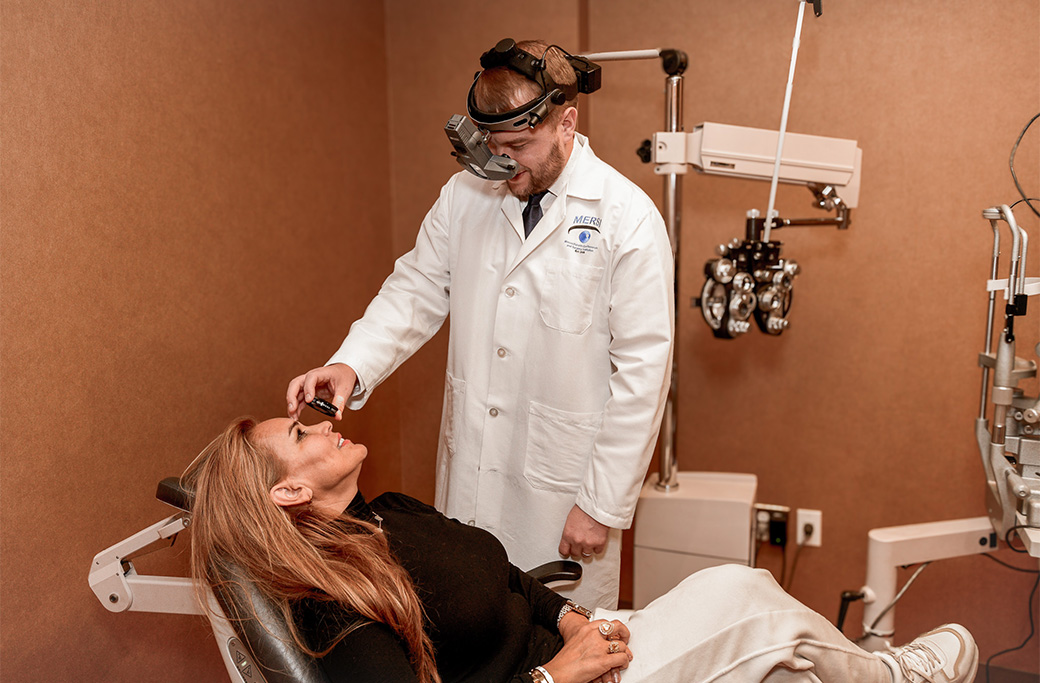
MERSI provides specialized evaluation and treatment for retinal conditions, including macular degeneration, diabetic retinopathy, retinal tears and detachments, macular disorders and inflammatory conditions affecting the retina.
Our retina specialists use dilated examinations and advanced retinal imaging to identify the cause of visual symptoms and develop individualized recommendations. Patients come to MERSI from Greater Boston and communities across New England for specialized retinal care.
If you have risk factors, a diagnosed retinal condition or a gradual change in vision, request an appointment with MERSI to discuss the appropriate next step.
For sudden flashes, a rapid increase in floaters, a curtain or shadow, sudden distortion or sudden vision loss, seek immediate professional guidance. A routine online appointment request should not be used in place of urgent care.
This article provides general educational information and does not replace individualized medical advice, diagnosis or treatment
Medically reviewed by:
Stephen D. Anesi, MD, FACS, Partner & Co-President
Specializes in: Ocular inflammatory diseases, cornea, glaucoma (medical, surgical & MIGS), cataract, and medical retina
Peter Y. Chang, MD, FACS, Partner & Co-President
Specializes in: Ocular inflammatory diseases, vitreoretinal surgery, and cataract
Carl S. Wilkins, MD
Specializes in: Ocular inflammatory diseases, vitreoretinal surgery, and cataract
Reviewed: August 27. 2026
Frequently Asked Questions About Retinal Health
Can retinal disease develop without eye pain?
Yes. Early diabetic retinopathy and early age-related macular degeneration may develop without pain or obvious visual symptoms. Appropriate dilated examinations can identify some retinal changes before a patient notices them.
Does everyone need to see a retina specialist routinely?
No. Many people receive routine preventive eye care from a comprehensive ophthalmologist or optometrist. A retina specialist may be appropriate when an examination detects retinal changes, when a patient has a diagnosed retinal condition or when symptoms suggest a retinal problem.
Are new flashes and floaters always an emergency?
Not every floater is caused by a retinal emergency. However, a sudden increase in floaters, particularly when accompanied by flashes, a shadow or missing vision, requires prompt evaluation to rule out a retinal tear or detachment.
Can retinal disease always be prevented?
No. Some retinal conditions are inherited, age-related or otherwise not preventable. Protective eyewear, management of diabetes and vascular health, avoiding smoking and receiving recommended eye examinations can reduce certain risks or improve the chance of early detection.