

Is Vision Loss a Normal Part of Aging? What to Know
The short answer is no: significant vision loss is not a normal or inevitable part of aging. Certain changes, such as needing more light to read or having difficulty focusing on nearby objects, become common as the eyes age. However, persistent blurred vision, missing areas of vision, distortion or sudden changes may indicate an eye condition that needs evaluation.
Knowing the difference between a common age-related change and a possible warning sign can help you seek the right care at the right time.
Which Vision Changes are Common with Aging?
The eyes change throughout life. Beginning in middle age, many people notice that close-up tasks become more difficult. This is often caused by presbyopia, a gradual loss of the eye’s ability to focus on nearby objects.
Common age-related changes may include:
-
-
Needing reading glasses or holding reading material farther away
-
Needing brighter, more direct light for reading and other close work
-
Taking longer to adjust when moving between bright and dim settings
-
Finding it harder to distinguish similar colors or low-contrast objects
-
Becoming more sensitive to glare, especially while driving at night
-
Although these changes can be associated with aging, they should not automatically be self-diagnosed. A comprehensive eye examination can determine whether a change is related to normal aging, a correctable focusing problem or an eye condition requiring care.
What Vision Changes Are Not A Normal Part Of Aging?
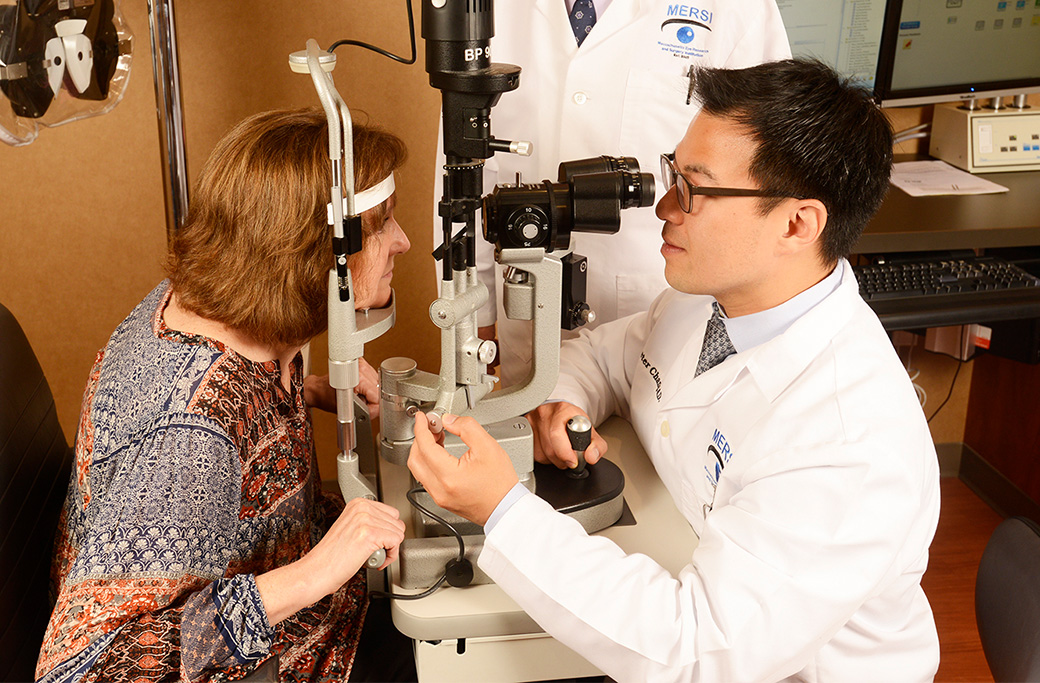
Aging may change how the eyes focus and adapt to light, but it should not be assumed to cause substantial or unexplained vision loss.
Arrange an eye evaluation if you experience:
-
-
Persistent or worsening blurred or cloudy vision
-
Difficulty seeing faces, reading or performing familiar activities
-
A dark, blurry or missing area in the center of your vision
-
Loss of side or peripheral vision
-
Straight lines that appear bent, wavy or distorted
-
New double vision
-
Changes that affect only one eye
-
Eye pain, pronounced redness or unusual sensitivity to light
-
A noticeable change that cannot be corrected with your current glasses
-
Some of these symptoms can have several possible causes. An examination is needed to identify the reason rather than attributing the change to age. MERSI’s guide to sudden vision changes explains why the speed and pattern of a change can be important.
Why Do Eye-Disease Risks Increase With Age?
Growing older does not guarantee that a person will develop an eye disease. However, the likelihood of several conditions increases with age.
Cataracts
A cataract occurs when the eye’s natural lens becomes cloudy. Cataracts may cause blurred or dim vision, glare, halos around lights, faded colors or difficulty seeing at night. Cataract-related changes are often gradual, but they should still be evaluated when they interfere with daily life.
Age-related macular degeneration
Age-related macular degeneration, or AMD, affects the macula—the part of the retina responsible for detailed central vision. AMD can make reading, recognizing faces and seeing fine detail more difficult.
Some people with AMD may notice blurred or distorted central vision, but the early stages may not cause obvious symptoms. Learn more about dry macular degeneration and VALEDA therapy at MERSI.
Glaucoma
Glaucoma is a group of diseases that damage the optic nerve. Some common forms can progress without pain or noticeable symptoms in their early stages. Peripheral vision may be affected gradually, making routine examinations particularly important for people with elevated risk.
Diabetic Eye Disease
Diabetes can damage blood vessels in the retina and cause diabetic retinopathy or diabetic macular edema. These conditions may not produce noticeable symptoms at first. People with diabetes should follow the eye-examination schedule recommended by their eye doctor and medical care team.
Retinal and Vitreous Changes
The clear gel filling the eye, called the vitreous, changes with age. These changes can cause flashes or floaters and, in some cases, may be associated with a retinal tear or detachment. A dilated eye examination is needed to distinguish a common vitreous change from a potentially serious retinal problem.
MERSI provides specialized retina care for medical and surgical retinal conditions.
Which Vision Symptoms Require Urgent Attention?

Some symptoms should not wait for a routine appointment.
Seek urgent eye evaluation for:
-
-
A sudden onset or substantial increase in floaters
-
Sudden flashes of light
-
A curtain, veil or shadow crossing part of the visual field
-
Sudden loss of vision
-
Sudden distortion or a new missing area of vision
-
Severe eye pain, especially when accompanied by redness, nausea or reduced vision
-
Sudden double vision or a sudden neurologic change affecting vision
-
These symptoms can have multiple causes, but some are associated with retinal detachment, acute glaucoma, vascular problems or other time-sensitive conditions.
Read more about when flashes and floaters may be serious.
Do not use an online appointment form if you are experiencing a sudden or severe vision change. Contact an eye-care professional immediately for instructions. If appropriate eye care is not promptly available, seek emergency medical evaluation.
When Is A Routine Eye Appointment Appropriate?
A routine appointment is generally appropriate for gradual changes such as increasing difficulty reading, needing more light, worsening glare or a prescription that no longer seems effective, provided there is no sudden loss of vision, pain or other urgent symptom.
You should also discuss regular comprehensive eye examinations with your doctor if you:
-
-
Are over age 60
-
Have diabetes, high blood pressure or another condition that can affect the eyes
-
Have a family history of glaucoma, macular degeneration or retinal disease
-
Take medication that may affect the eyes
-
Have had previous eye surgery, injury or inflammation
-
Already have an eye condition that requires monitoring
-
There is no single examination schedule that is appropriate for everyone. Your eye doctor should recommend timing based on your age, symptoms, medical history and individual risk factors.
How Can You Support Healthy Vision As You Age?
Not every eye disease is preventable, but several practical steps can support eye health and make it more likely that problems will be identified promptly.
-
-
Attend recommended comprehensive eye examinations.
-
Manage diabetes, blood pressure and other health conditions with your medical team.
-
Avoid smoking and seek support if you need help quitting.
-
Wear appropriate protective eyewear during sports, yard work, home repairs and occupational activities.
-
Use sunglasses that provide appropriate ultraviolet protection.
-
Maintain good lighting and reduce fall hazards at home if changes in contrast or depth perception make movement more difficult.
-
Contact your eye doctor when your vision changes instead of assuming the change is caused by age.
-
Vision Loss Should Not Be Dismissed As “Just Getting Older”
Some changes in focusing and light adaptation are expected as the eyes age. Meaningful vision loss, however, deserves evaluation.
MERSI’s ophthalmologists provide comprehensive and specialized care for patients with cataracts, retinal disease, macular degeneration, glaucoma, corneal disease, ocular inflammation and complex vision concerns. Patients throughout Greater Boston and New England may request an appointment with MERSI for a non-emergency evaluation.
If you are experiencing sudden vision loss, new flashes or floaters, a curtain or shadow in your vision, or another abrupt change, seek urgent professional guidance rather than submitting a routine appointment request.
This article provides general educational information and does not replace an examination, diagnosis or individualized medical advice from a qualified healthcare professional.
Medically reviewed by: Peter Y. Chang, MD, FACS
MERSI specialty: Ocular inflammatory diseases, Vitreoretinal surgery, Cataract
Reviewed: August 27. 2026
Frequently Asked Questions
Is eyesight supposed to worsen with age?
Some focusing, contrast and light-adaptation changes become more common with age. Significant or unexplained vision loss is not considered an inevitable result of aging and should be evaluated.
What is the most common vision change after age 40?
Presbyopia, the gradual loss of the ability to focus clearly on nearby objects, is a common change beginning in middle age. Reading glasses or another vision correction may help, but an eye examination is still recommended to confirm the cause of blurred near vision.
Does needing brighter light mean I have an eye disease?
Not necessarily. Needing more light can be associated with normal aging, but it may also occur alongside cataracts or other eye conditions. Mention the change during an eye examination, particularly if it is worsening or accompanied by glare, cloudiness or difficulty performing daily activities.
Can eye disease develop without noticeable symptoms?
Yes. Several eye diseases, including some forms of glaucoma, diabetic retinopathy and early macular degeneration, may cause few or no noticeable symptoms initially. Comprehensive eye examinations can identify changes that a patient may not yet notice.
Can age-related vision loss be treated?
That depends on its cause. Some changes can be corrected with glasses, while certain diseases may be treated or managed medically or surgically. Other damage may be permanent. An accurate diagnosis is necessary.