
Quick Answer: IV infusion therapy may be recommended for uveitis when inflammation is severe, recurrent, affects the back of the eye, or cannot be adequately controlled with steroid eye drops or oral medications. These medications help regulate the immune system, reduce inflammation, and protect vision while minimizing the need for long-term corticosteroid use.
When Are Standard Uveitis Treatments No Longer Enough?
Many patients with uveitis respond well to corticosteroid eye drops, oral medications, or localized steroid injections. These treatments are often effective for mild or short-term inflammation.
However, some forms of uveitis become more difficult to control. When inflammation continues despite treatment, repeatedly returns, or threatens important structures inside the eye, your ophthalmologist may recommend IV infusion therapy as part of a long-term treatment plan.
The goal is not simply to relieve symptoms. It is to control the underlying inflammation before permanent vision damage occurs.
For a complete overview of the condition, read What Is Uveitis? Symptoms, Causes, Diagnosis & Treatment.
When Is IV Infusion Therapy Recommended?
Every patient is different, but infusion therapy is commonly considered when one or more of the following applies:
-
- Uveitis continues to recur despite treatment.
- Steroid eye drops or oral medications are no longer controlling inflammation.
- Long-term steroid use is causing significant side effects.
- Inflammation affects the retina, choroid, or other structures in the back of the eye.
- Both eyes are affected.
- An autoimmune disease is contributing to ongoing inflammation.
- There is a significant risk of permanent vision loss.
Rather than relying on one symptom or test result, your specialist evaluates the entire clinical picture before recommending infusion therapy.
Which Types of Uveitis Are Most Likely to Require Infusion Therapy?
Although any type of uveitis may require advanced treatment in certain situations, infusion therapy is more commonly recommended for severe or chronic forms of inflammatory eye disease.
Posterior Uveitis
Posterior uveitis affects the retina and choroid, where inflammation can directly threaten vision. Since eye drops cannot effectively reach these deeper structures, systemic treatment is often necessary.
Panuveitis
Panuveitis involves inflammation throughout multiple parts of the eye. These complex cases frequently require immunomodulatory medications to achieve long-term disease control.
Chronic or Recurrent Uveitis
Some patients experience repeated flare-ups even after successful treatment. When inflammation continues returning, infusion therapy may help reduce recurrences while protecting delicate ocular tissues.
Learn more about recovery and recurrence in How Long Does Uveitis Treatment Take?
Why Isn’t Long-Term Steroid Use Always the Best Option?
Steroids remain one of the most effective ways to rapidly reduce inflammation, but prolonged use is not without risk.
Long-term corticosteroid therapy may increase the likelihood of:
-
- Cataracts
- Glaucoma
- Elevated eye pressure
- Osteoporosis
- Weight gain
- Diabetes complications
- Increased susceptibility to infection
For many patients, IV infusion therapy serves as a steroid-sparing treatment, allowing inflammation to remain controlled while reducing prolonged steroid exposure.
How Does Your Specialist Decide Whether Infusion Therapy Is Right for You?
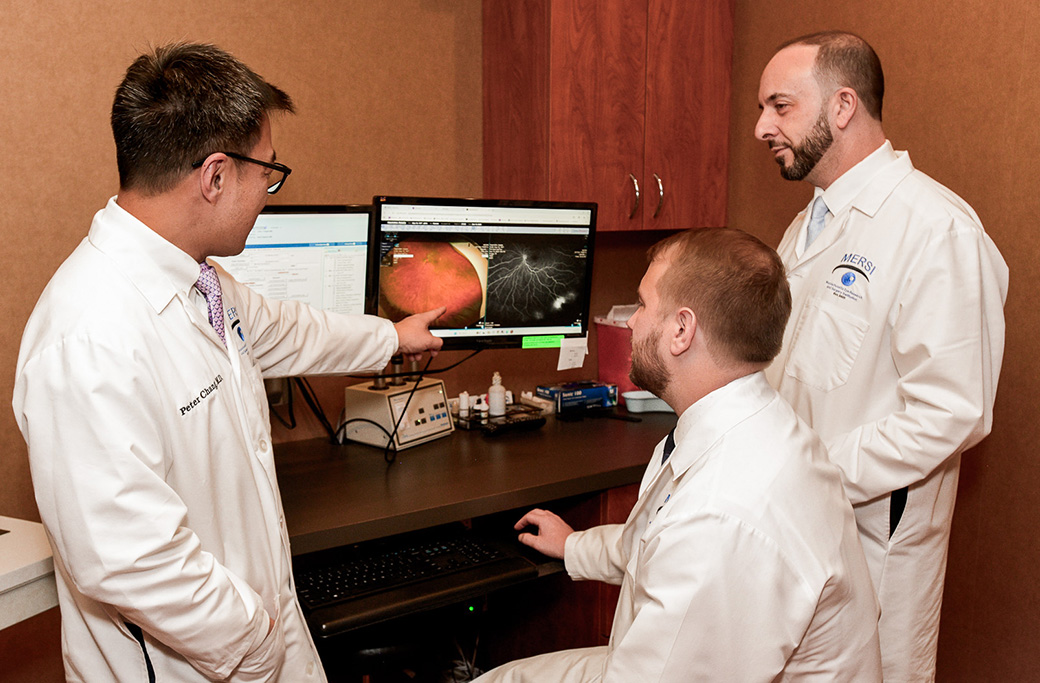
Before recommending IV treatment, your ophthalmologist performs a comprehensive evaluation to determine both the severity of the inflammation and its underlying cause.
This evaluation may include:
-
- A comprehensive eye examination
- Slit-lamp examination
- Dilated retinal examination
- Optical coherence tomography (OCT)
- Fluorescein angiography when indicated
- Blood work and laboratory testing
- Evaluation for autoimmune or infectious diseases
These findings help determine whether infusion therapy offers the safest and most effective treatment strategy.
Learn more in How Is Uveitis Diagnosed? Tests & Eye Exam Process Explained and What Tests Are Used to Diagnose Uveitis?
What Medications Are Used During IV Infusion Therapy?
Treatment is individualized based on your diagnosis, medical history, and response to previous therapies.
Depending on the cause of your uveitis, medications may include:
-
- Infliximab
- Rituximab
- Tocilizumab
- Solu-Medrol
- Teprotumumab (for selected inflammatory eye conditions)
These medications work by regulating abnormal immune system activity that contributes to ongoing inflammation. Unlike cancer chemotherapy, ophthalmic infusion therapy uses immunomodulatory medications specifically selected to control inflammatory eye disease and preserve vision.
What Happens During an Infusion Appointment?

Most infusion appointments take place in a comfortable outpatient setting.
During your visit, you can expect:
-
- Review of your medical history and treatment plan
- Vital sign monitoring
- Placement of an intravenous (IV) line
- Administration of medication over a scheduled period
- Observation during and after treatment
Many patients spend the infusion reading, working on a laptop, or simply relaxing while the medication is administered. At MERSI, patients benefit from an integrated ophthalmic infusion suite where physician oversight, laboratory monitoring, and infusion therapy are coordinated within the same practice.
Learn more in What Does IV Treatment for Uveitis Feel Like?
Why Early Treatment Matters
Inflammation inside the eye can damage structures responsible for clear vision, including the retina, optic nerve, and macula.
Without appropriate treatment, uveitis may lead to complications such as:
-
- Permanent vision loss
- Macular edema
- Cataracts
- Glaucoma
- Retinal damage
Beginning treatment before inflammation causes irreversible injury offers the best opportunity to preserve long-term vision.
Learn more in Is Uveitis Serious? Risks, Causes & Vision Loss.
Schedule a Comprehensive Uveitis Evaluation at MERSI

When uveitis becomes difficult to control, timely evaluation by a specialist is essential. At the Massachusetts Eye Research and Surgery Institution (MERSI), our fellowship-trained retina and uveitis specialists provide advanced diagnostic testing, personalized treatment plans, and access to a dedicated ophthalmic infusion suite for patients with complex inflammatory eye disease.
Whether you have recently been diagnosed with uveitis or continue to experience recurring inflammation despite treatment, our team can determine whether IV infusion therapy is appropriate for your condition.
Schedule a comprehensive uveitis evaluation at MERSI to learn more about your treatment options and protect your long-term vision.
Frequently Asked Questions
When is IV infusion therapy recommended for uveitis?
IV infusion therapy is generally recommended when uveitis is severe, recurrent, affects the back of the eye, or cannot be adequately controlled with eye drops or oral medications.
Does every patient with uveitis need infusion therapy?
No. Many patients improve with steroid eye drops or oral medications. Infusion therapy is typically reserved for more complex or vision-threatening cases.
Can infusion therapy replace steroids?
In many cases, infusion therapy is used as a steroid-sparing treatment to reduce long-term corticosteroid use while maintaining control of inflammation.
How long will I need IV infusion therapy?
Treatment length varies depending on the type of uveitis, its underlying cause, and your response to therapy. Some patients receive treatment for several months, while others require longer-term management.
Is IV infusion therapy safe?
When administered under the supervision of experienced specialists, IV infusion therapy is carefully monitored. Your ophthalmologist will discuss the benefits, potential risks, and appropriate follow-up based on your individual condition.